



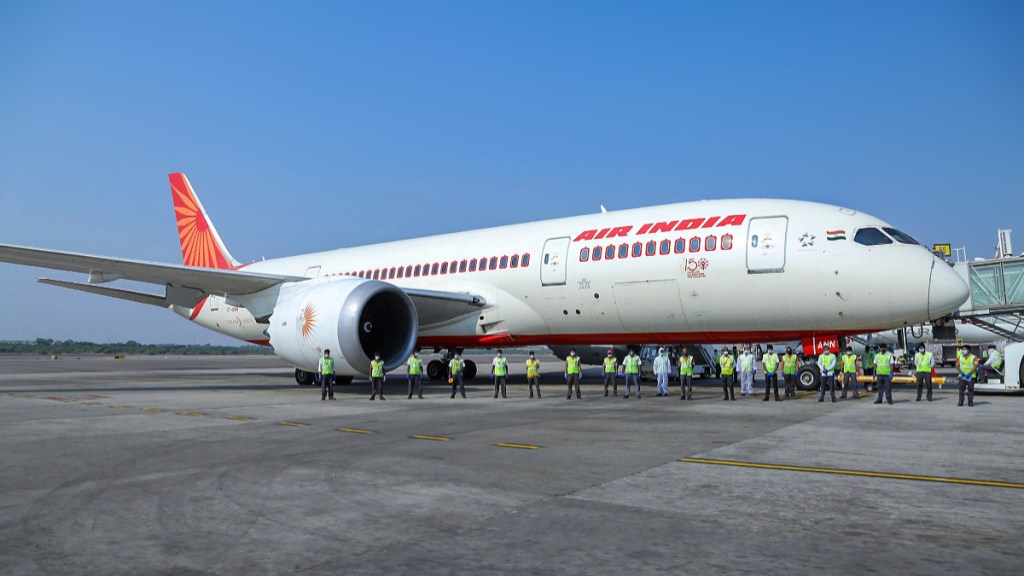
Air India‘s 164-seater Airbus A320 was flying with an expired airworthiness licence, potentially putting the safety of passengers at risk, a report by The Economic Times said. The Airbus flew eight times on November 24-25 before an engineer discovered the huge lapse, after which the plane was taken out of service, the report added citing people familiar with the matter.
DGCA begins probe, Air India likely to face penalties
The incident has prompted yet another investigation by the Directorate General of Civil Aviation (DGCA). The Certificate of Airworthiness is granted by the DGCA and must be renewed every year. It is only issued after the aircraft has completed its required maintenance checks and is confirmed to be safe to fly. A government official told ET that flying a plane without the proper licences and certificates is a serious violation, and Air India could face heavy penalties, including possible action against senior officials.
Flying with expired licence lands Air India in insurance trouble too, claims report
Since the June 12 Dreamliner crash that killed 260 people, the airline has been trying to rebuild trust and assure passengers that safety is its top priority. The airline said it has already suspended everyone involved in the decision to send the aircraft out without a valid licence, reported ET. The A320 is still grounded while the DGCA continues its inquiry. The carrier may also face issues with its lessors, as operating a plane with an expired licence can void its insurance.
A government official said the airline put both the flight and its passengers at risk by using an aircraft that had not been certified as airworthy, calling it a serious breach that should not happen at a major airline like Air India.
The DGCA carries out surprise inspections, but the airline itself is responsible for keeping its planes in safe, approved condition.
An Air India spokesperson said the matter was immediately reported to the DGCA once it was discovered, and the airline has started a detailed internal investigation.
Air India’s safety practices in question
Senior aircraft engineers told ET that with today’s digital systems, it is very difficult to overlook routine tasks such as licence renewals or maintenance checks. The report added that Air India has its own Continuing Airworthiness Management Organisation (CAMO), which is responsible for keeping track of these requirements.
A DGCA inspector explained that airlines usually begin the renewal process at least three months before the deadline so that certificates are updated well in advance. He added that once an aircraft finishes its daily schedule and is parked for the night, an engineer is supposed to check all documents and approvals. The fact that this aircraft flew eight times with an expired licence, he said, raises serious doubts about Air India’s safety practices.
The DGCA is expected to treat this as a Level 1 violation, the most serious category affecting flight safety. It adds to the list of safety lapses that have troubled Air India’s operations. Earlier, top executives, including CEO Campbell Wilson, received show-cause notices for allowing aircraft to operate with parts that had already exceeded their approved lifespan. A few months ago, the regulator also suspended the head of Air India’s engineering quality department, which oversees compliance audits.
These repeated problems highlight the Tata group’s ongoing struggle to improve the airline’s standards nearly four years after taking it private.
A senior Air India executive said the airline is now depending more on support from Singapore Airlines, which owns 25.1% of the company, to strengthen its engineering systems. Jeremy Yew, a senior vice president at Singapore Airlines Engineering Services, has already been assigned to Air India, and more SIA experts are expected to join, the ET report said.
Financial Express is currently trying to reach Air India for a comment. We will updates this space once we get their reaction.