


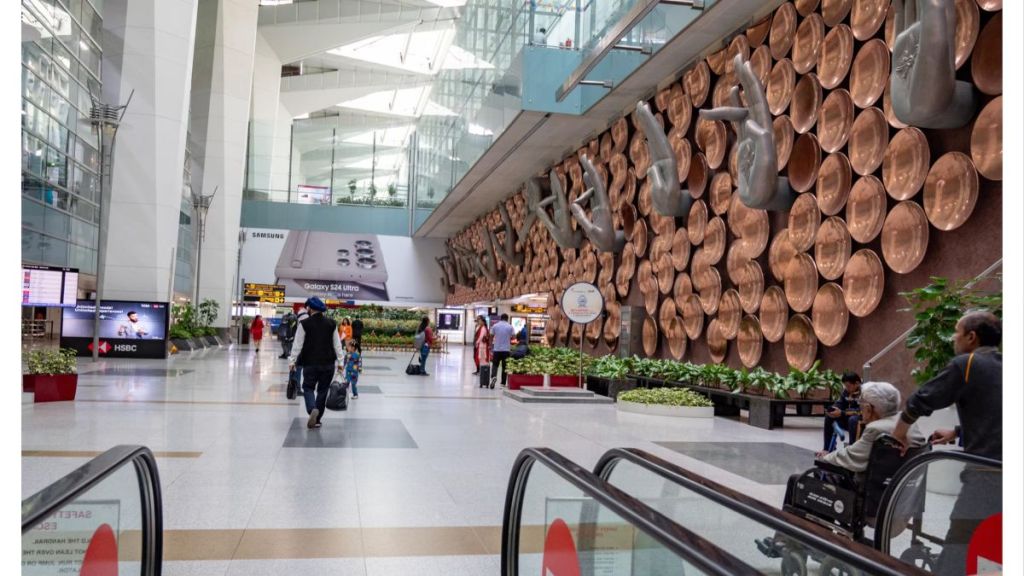

Delhi’s Indira Gandhi International Airport is emerging as a more important international connecting hub, with its global connectivity ranking improving sharply as IndiGo’s expanding domestic network feeds into a growing international network.
Delhi climbed 11 places to rank 28th among the world’s most connected international airport hubs in aviation data provider OAG’s Megahubs 2026 report. It was ranked 39th in 2025. Dubai International Airport, meanwhile, fell from 15th to 31st, although disruption in West Asia also affected the rankings this year.
The OAG ranking is not based simply on passenger traffic, number of flights or destinations. It measures the number of possible international connections that can be made between arriving and departing flights within a six-hour window, taking into account factors such as minimum connection times and destinations served.
The improvement therefore points to a change in the role of Delhi airport, from being primarily an origin-and-destination airport for the National Capital Region to becoming a stronger transfer point for passengers travelling between domestic and international destinations.
IndiGo is central to this shift. The airline accounts for 40% of flights at Delhi, according to OAG, giving the airport a large domestic feeder network that can connect passengers from other Indian cities to international services operating from the capital.
Delhi’s strength is particularly visible in the low-cost carrier segment. It ranks ninth globally in OAG’s Low-Cost Megahubs index, with low-cost carriers accounting for 57% of capacity at the airport. IndiGo’s dominant presence gives it a substantial role in creating potential connections across the network.
Mumbai is also gaining prominence as a low-cost connectivity hub. It ranks 11th globally in the LCC Megahubs ranking, with low-cost carriers accounting for 60% of capacity. IndiGo operates 43% of flights at Mumbai.
The two airports underline the growing role of India’s largest aviation markets in international low-cost networks. However, the connectivity remains concentrated, with Delhi the only Indian airport to feature in OAG’s global Top 50 international Megahubs ranking.
In the Asia-Pacific region, Delhi ranks ninth, behind Kuala Lumpur, Seoul, Tokyo, Singapore, Bangkok, Shanghai, Guangzhou and Hong Kong. Eight airports from the region feature in the global Top 25, reflecting the intense competition among Asian hubs.
Istanbul topped the global ranking, followed by London Heathrow, Amsterdam Schiphol, Kuala Lumpur and Chicago O’Hare. Istanbul serves 337 destinations, with Turkish Airlines accounting for 80% of its capacity.
The comparison with Dubai needs some context. OAG said ongoing disruption in West Asia affected the 2026 rankings, with scheduled capacity in the region in August 5.7% below August 2025. Dubai and Doha were among the airports affected.
Delhi’s rise, nevertheless, comes as Indian airlines are expanding international operations and building larger networks around the country’s major metropolitan airports, thereby increasing the potential for these airports to serve as connecting hubs.