


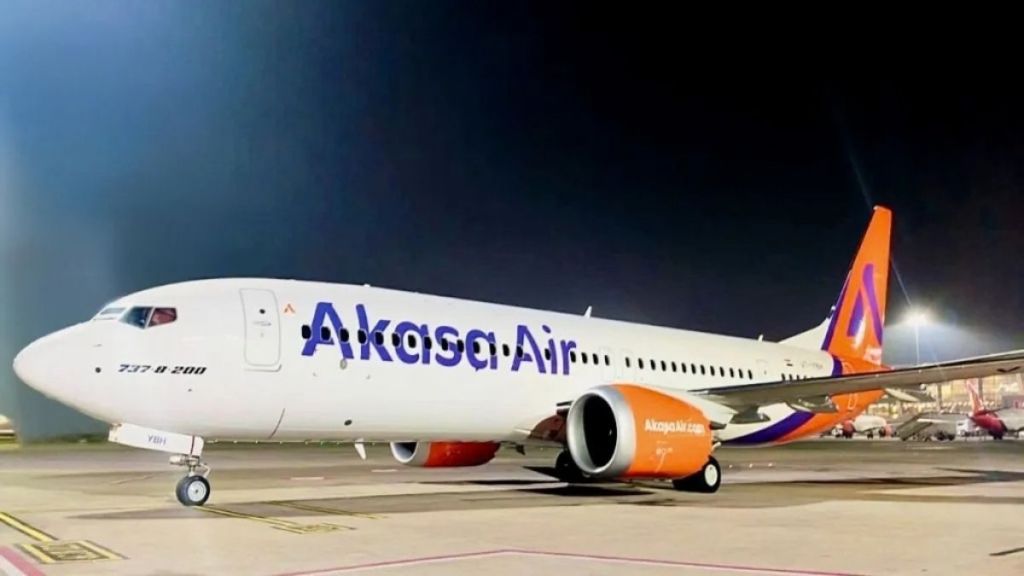

Akasa Air on Monday said it was coordinating with Boeing over a software issue affecting automated flight guidance on some 737 MAX aircraft, while asserting that there was no impact on the safety of its operations. Air India Express and the Directorate General of Civil Aviation (DGCA) are yet to comment on the issue.
“We are closely coordinating with Boeing and can confirm that there is no impact on the safety of Akasa Air operations, our aircraft continue to operate safely in accordance with established procedures and applicable regulatory requirements.” Akasa did not specify whether any of its 737 MAX aircraft had experienced the issue.
Boeing has identified a software issue that could cause automated flight guidance to disengage during a specific landing scenario, potentially affecting around 96 737 MAX aircraft operated by Indian airlines. Air India Express operates about 53 MAX aircraft, while Akasa Air has 43.
According to Boeing, the issue can occur when pilots alter their planned flight path after a missed approach. The automated flight guidance system could disengage if the subsequent approach path differs from the one originally planned.
Boeing said it informed all 737 MAX operators about the issue last month and is working on a software update to permanently address the problem. In the meantime, operators have been provided information reinforcing existing pilot procedures for handling the situation.
The issue does not prevent the aircraft from being flown manually. Boeing has advised operators to reset the system following a missed approach as a precautionary measure, according to sources.
The US Federal Aviation Administration (FAA) has said it will convene a corrective action review board and take immediate action if it identifies a safety concern.
According to Mark Martin, founder of Martin Consulting, “The Boeing 737 MAX glitch represents a significant operational risk for Indian airlines, particularly during missed approaches in adverse weather. If autopilot fails to engage after a go-around, pilots would have to manually manage the aircraft at a high-workload stage of flight, increasing cockpit workload and potentially fatigue. The underlying cause needs to be investigated thoroughly, especially given the MAX’s history of software and hardware issues. While Boeing has informed airlines and is working on a permanent fix, the issue could potentially lead to groundings if its severity is established and warned that the problem may be more serious than currently understood.”
In Asia, FlyDubai, Akasa Air, Air India Express, Singapore Airlines and Thai VietJet are some of the airlines that operate the Boeing 737 MAX aircraft.
The latest software issue adds to the scrutiny surrounding the 737 MAX, which was grounded worldwide following two fatal crashes. A Lion Air 737 MAX 8 crashed in Indonesia in October 2018, killing 189 people, while an Ethiopian Airlines 737 MAX 8 crashed in March 2019, killing 157 people.
The aircraft was subsequently grounded globally and was allowed to return to service from late 2020 after Boeing made changes to the aircraft and its systems.