


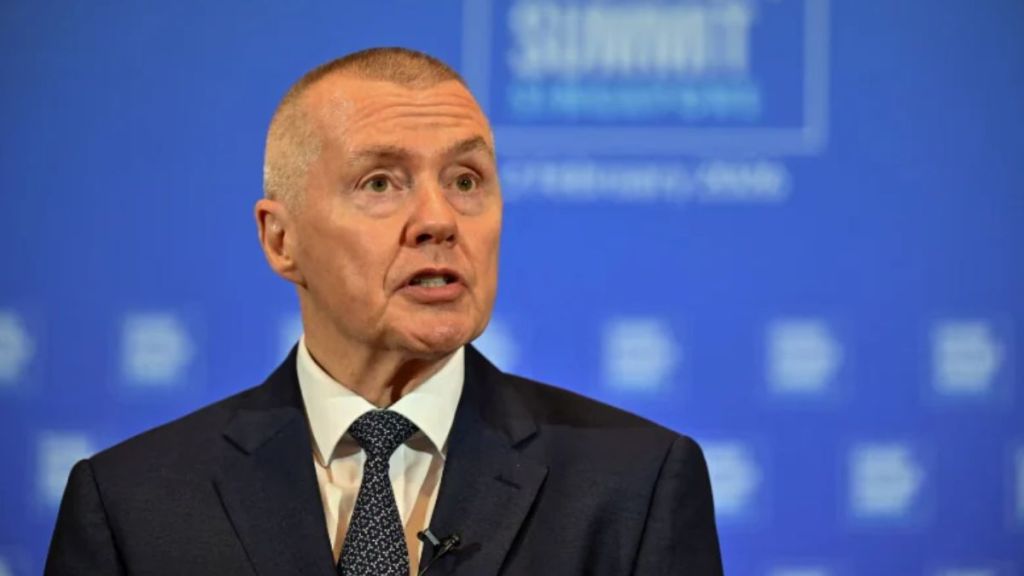

In what marked his first in-person briefing since taking charge as the chief executive in August, IndiGo CEO Willie Walsh on Monday flagged airport charges as being “too high,” PTI reported. He stressed that the Indian aviation market will do much better with lower charges and taxes. Offering an update on its wide-body Airbus A350 aircraft, the airline’s top executive said that IndiGo is expecting to start receiving them from the second quarter of 2028.
As previously pointed out by IndiGo Managing Director Rahul Bhatia, Walsh reiterated that aviation turbine fuel (ATF) makes up nearly 40% of operation costs.
Nonetheless, the Indian airline boss asserted that IndiGo expects to maintain its growth trajectory. In an October 31 update, the Finance Ministry increased the duty on ATF exports from Rs 10.50 to Rs 11 per litre.
“We will continue to look for them to be much more competitive when it comes to pricing given that they are effective monopolies,” the largest Indian airline’s boss said on Monday.
IndiGo CEO says airline is pushing through challenges in its path
The leading Indian carrier currently operates more than 2,100 flights daily with an operational fleet of over 400 aircraft. Walsh, however, further emphasised that IndiGo sees “incredible opportunities” in spite of the major challenges the aviation industry, at large, is facing amid ongoing global crises.
Given the current hostile conditions in Saudi Arabia (an extension of the ongoing Iran war), various Indian airlines have already extended their flight cancellations in the gulf kingdom. IndiGo specifically has cancelled its flights to and from Riyadh, Jeddah, Dammam and Madinah until November 14, citing airspace restrictions in the region.
The IndiGo CEO also alluded to this situation while speaking at the media roundtable on Monday.
On top of that, he acknowleged that the extended closure of Pakistani airspace posed a major setback for the industry. Last month, the Pakistan Airports Authority (PAA) announced that Indian carriers now face a Pakistani airspace ban until November 24. The previous extension was set to expire on October 24, 2026.
Both India and Pakistan initiated airspace restriction on each side’s planes after the 2025 Pahalgam terror attack that left 26 people dead. India held Pakistan responsible for the attack, a claim Islamabad continues to refute.
Before IndiGo CEO’s plea, another top executive demanded tax cuts
Months ago, IndiGo Managing Director Rahul Bhatia had made a similar plea to the governent to lower taxes on aviation turbine fuel and airport charges, insisting that lowe airfares could help tap into a “massive” demand in India’s aviation market, according to a PTI report. He further pushed that if taxes continue to rise on air travel, which has become a public utility, it would become an “elitist mode of transport.”
“I think some of these things have to get rationalised,” Bhatia said, as quoted by PTI. “Because the Indian consumer is so price sensitive that if you can lower fares, you just open up a massive demand.”
Bhatia particularly pointed that IndiGo, which held a 66.3% of India’s domestic aviation market in June, can’t help by lead the increase in airfare when faced with unavoidable higher costs.
“If the fuel goes up 30% and nobody raises fare, it’s an excruciating pain for the industry,” he continued, adding that carriers bring fares down when market conditions permit.