


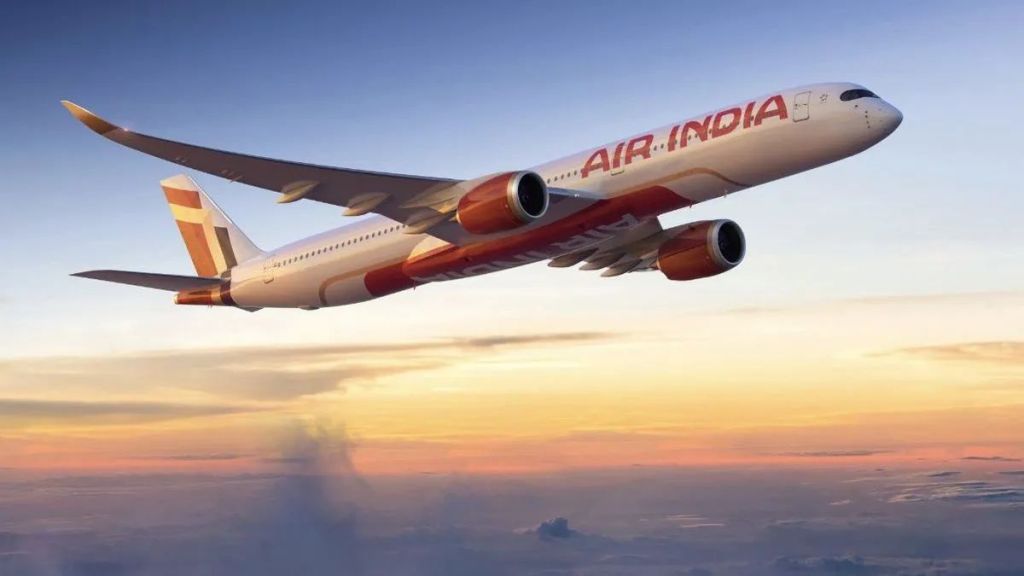

The Air India Airbus A320 Neo that suffered a sudden altitude loss while flying from Phuket to Delhi on August 4 had lost all three hydraulic systems within seconds, triggering an autopilot disengagement, stall warning and altitude upset, according to the preliminary report of the Aircraft Accident Investigation Bureau (AAIB).
The report also flagged a serious safety concern after the pilot-in-command (PIC) tested “non-negative” for psychoactive substances in a post-flight confirmatory test. AAIB has recommended that aviation safety regulator Directorate General of Civil Aviation (DGCA) take appropriate action to prevent the abuse of such substances.
The aircraft, VT-EXO, was cruising at 36,000 feet in the Kolkata Flight Information Region when its flight control system detected a loss of the green hydraulic system at 04:02:43 UTC on August 4. Four seconds later, it detected the loss of the blue and yellow systems, the report said.
The autopilot disengaged at 04:02:48 UTC, followed by a continuous repetitive chime. A stall warning was triggered three seconds later. The co-pilot, who was flying the aircraft, attempted to control the situation before the PIC took over.
The aircraft climbed 372 feet but subsequently lost 292 feet from its assigned flight level. The blue hydraulic system recovered shortly afterwards, followed by the yellow and green systems, allowing the flight control surfaces to return to normal operation, AAIB said.
The seatbelt signs were switched off at the time, resulting in injuries to passengers and cabin crew. The pilots decided to continue to Delhi instead of diverting to a nearer airport and sought medical priority from Delhi air traffic control.
After landing safely, 20 passengers and four cabin crew members received medical assistance. Twenty were discharged after initial treatment, while four with serious injuries were hospitalised. The aircraft sustained damage to overhead bins, ceiling panels and other cabin fixtures.
The report said the aircraft had been dispatched under a Minimum Equipment List (MEL) provision relating to the Power Transfer Unit (PTU), which had been invoked on July 28. The PTU acts as an auxiliary pressure source for the green and yellow hydraulic systems without transferring hydraulic fluid between them.
The aircraft has three independent hydraulic systems—green, blue and yellow—which power various flight controls and other systems. AAIB said relevant hydraulic components had been removed for analysis. Flight recorders have also been recovered and their data is being examined. France’s BEA and Airbus technical experts are assisting the investigation, with the Airbus team inspecting the aircraft between August 13 and 15.
The report also revealed that both pilots underwent post-flight medical examinations in Delhi. While breathalyser tests were satisfactory for both, samples from both pilots were subsequently tested for psychoactive substances. The PIC’s initial sample was found non-negative, following which blood samples were sent for confirmatory testing. The confirmatory test was also non-negative, while the co-pilot tested negative in both tests.
AAIB said confirmation of psychoactive substance use by one of the flight crew was a serious concern. Its interim safety recommendation calls for appropriate action by DGCA.
Air India in a statement, said it continued to extend full cooperation to the investigation, including providing access to operational, maintenance and technical records. “Safety remains Air India’s highest priority,” a spokesperson said, adding that the airline had started voluntary testing of 100% of its pilots following the incident. The airline maintains zero tolerance for any breach of safety, fitness or regulatory requirements and will take appropriate action wherever warranted, the spokesperson said.
AAIB said its detailed investigation into the technical and other aspects of the accident remains underway.