




Ten years after its launch, the UDAN scheme has connected scores of remote towns by air. Yet for many passengers, the journey remains incomplete.
Speaking exclusively to Financial Express.com, Suseelan, Chairman of Divine Air, says the next phase of the scheme must move beyond building airports and concentrate on making them genuinely usable. He calls for stronger last-mile connectivity between remote airports and nearby cities, greater financial support from state governments to keep regional flights viable, and even the possibility of taking the scheme international.
Expert calls for better transport connectivity between airports and cities
Suseelan emphasised the need for state governments to provide reliable transport services connecting remote airports with nearby cities. He said better airport-to-city connectivity would allow more passengers to benefit from regional air services.
For travellers, state-run transport could make it easier and more affordable to reach airport terminals, particularly in smaller cities where public transport options may be limited. His recommendation highlights the importance of improving the entire passenger journey rather than focusing only on building airports.
State subsidies needed to keep regional flights viable
Greater cooperation between the Centre and state governments could play a crucial role in making regional flights sustainable.
Speaking to Financial Express.com, Suseelan underlined the need for additional financial assistance for operators.
“The Central Government is looking for support from state bodies to roll out similar subsidies to operators to make the sectors more viable,” Suseelan stated.
Such support, according to his recommendation, could help airlines sustain operations on routes serving smaller cities, where passenger demand may take time to develop.
Aircraft shortages and unused UDAN routes: Expert calls for penalties
Suseelan raised concerns over airlines securing UDAN routes despite aircraft shortages. He said that due to the “non availability of the aircraft”, some awarded routes remain unoperated, while exclusive rights prevent other airlines from introducing services.
He also pointed out that some previously profitable routes were discontinued after airlines secured new ones. Urging the government to review operators’ capacity before awarding routes, Suseelan recommended that it should “impose penalties if commitments are not fulfilled by Airlines.”
Could UDAN go international?
Looking ahead, Suseelan suggested exploring international connectivity as a possible future direction for the scheme.
He also pointed to opportunities for Indian airlines and carriers from neighbouring countries to expand their networks through regional partnerships.
“If UDAN opens this vertical, most of the citizens will get benefit and operators will get opportunities to expand their network,” he told Financial Express.com.
His suggestion concerns a possible future expansion of the scheme, rather than an announced international UDAN programme.
UDAN at 10: What the scheme has achieved so far
According to a Press Information Bureau (PIB) release issued on October 20, 2026, the Regional Connectivity Scheme, also known as UDAN (Ude Desh ka Aam Nagrik), was launched on October 21, 2016, to make regional air travel more affordable and improve connectivity to unserved and underserved destinations.
| Key indicator | Achievement |
| Regional routes operationalised | 687 |
| Aerodromes operationalised | 95 |
| Passengers carried | 1.72 crore |
| Flights operated | Over 3.68 lakh |
| Viability Gap Funding disbursed | Rs 5,091.23 crore |
The 95 aerodromes include 17 heliports and two water aerodromes. The VGF disbursement figure is as of October 15, 2026.
The government provides Viability Gap Funding (VGF) to support airlines operating regional routes that may otherwise be commercially difficult to sustain.
The next big push: Rs 28,840-crore expansion plan
The next phase of UDAN, formally launched on July 4, 2026, has a total outlay of Rs 28,840 crore and is planned for implementation between FY 2026-27 and FY 2035-36.
According to PIB, the expansion includes:
- 100 airports: Rs 12,159 crore allocated to develop airports from existing unserved airstrips.
- 200 modern helipads: Rs 3,661 crore planned to improve access in remote, hilly and other priority regions.
- Airline support: Rs 10,043 crore proposed as VGF over 10 years to help sustain regional flights.
- Airport maintenance: Rs 2,577 crore earmarked for three years of operation and maintenance support for approximately 441 aerodromes.
The government has also proposed Rs 400 crore to support the acquisition of indigenous helicopters and aircraft for regional operations.
The new phase places greater emphasis on ensuring that airports and airline services remain operationally sustainable, alongside expanding infrastructure.
How UDAN has changed travel till now
The October 20 PIB release highlighted several regional airports where improved air connectivity has helped reduce travel difficulties and support local economic activity.
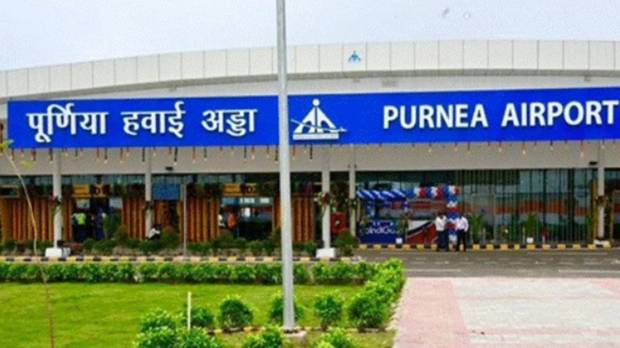
Purnea, Bihar: Before the airport became operational in 2025, residents of the Seemanchal and Kosi regions often had to travel more than 200 km to Bagdogra Airport. Improved air access has reduced travel time to Kolkata to nearly two hours and Patna to around one hour.
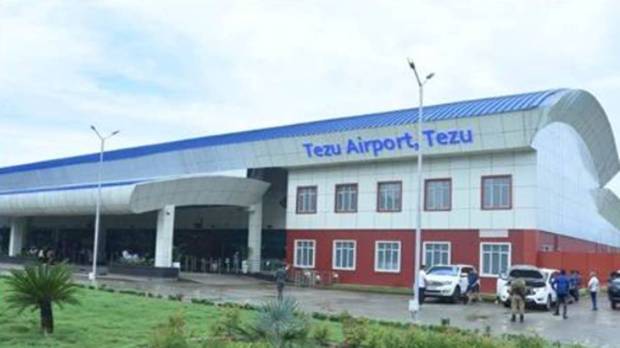
Tezu, Arunachal Pradesh: Operationalised in 2021, the airport has improved connectivity in the remote Lohit district. Travel time to Guwahati has fallen to about one hour, while the facility has also supported the movement of agricultural produce.
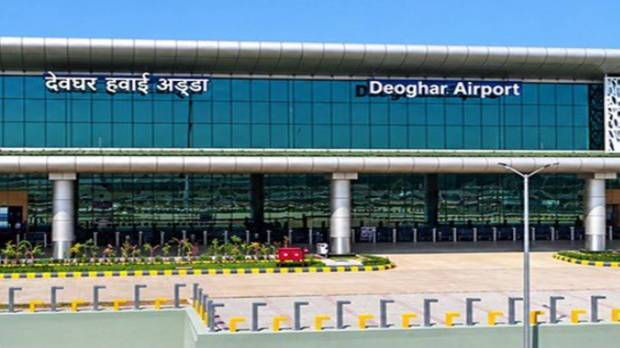
Deoghar, Jharkhand: The airport has improved access for pilgrims visiting Baba Baidyanath Dham. Air connectivity has reduced travel time from Delhi to approximately two hours and supported tourism and healthcare-related travel.
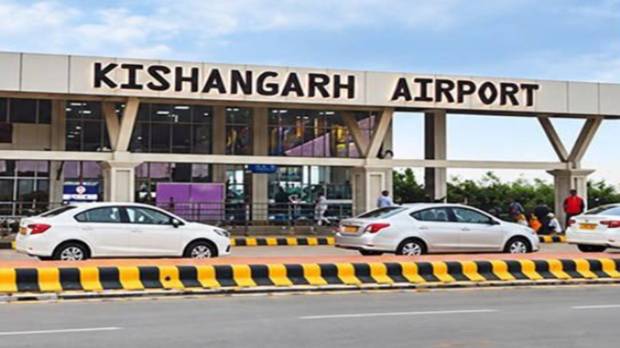
Kishangarh, Rajasthan: Air connectivity has improved access to the Ajmer-Pushkar region, which previously depended heavily on Jaipur Airport. Improved connectivity has also benefited local businesses and aviation-related employment.
Northeast routes: A total of 90 priority regional routes have been operationalised across the northeastern states, improving connectivity in areas where difficult terrain makes surface travel challenging.
A decade of expansion, but gaps remain
As per PIB, UDAN has expanded regional air connectivity and improved access to air travel by connecting unserved and underserved airports. India is now the world’s third-largest domestic aviation market, with operational airports increasing from 74 in 2014 to 166 in 2026.
Yet for many passengers, the experience remains incomplete. Airports have come up, but reliable last-mile connectivity is still missing in several places. Travellers often face long or expensive road journeys to reach terminals, reducing the practical value of having an airport nearby.
Will more airports guarantee better connectivity?
Developing airports is only one part of upgrading regional aviation. For flyers, the availability of flights, convenient schedules, reliable transport to and from airports, and affordable fares will also matter.
While addressing a Ministry of Civil Aviation workshop on July 16, 2026, Civil Aviation Minister Ram Mohan Naidu Kinjarapu highlighted the government’s approach to regional connectivity.
“10 years ago, traffic was concentrated on the top six airports, leaving Tier-II-Tier -II cities underserved or unserved.”
The government has signed 21 memorandums of understanding involving the Centre, states and Union Territories, and the Airports Authority of India. A Challenge Mode Portal will allow participating states and Union Territories to nominate airstrips and helipads for possible development.
After a decade of UDAN, the focus is shifting from expanding the regional network to making connectivity more useful and sustainable.
Whether the next phase delivers lasting benefits for passengers will depend on how effectively the proposed infrastructure translates into accessible air services.