


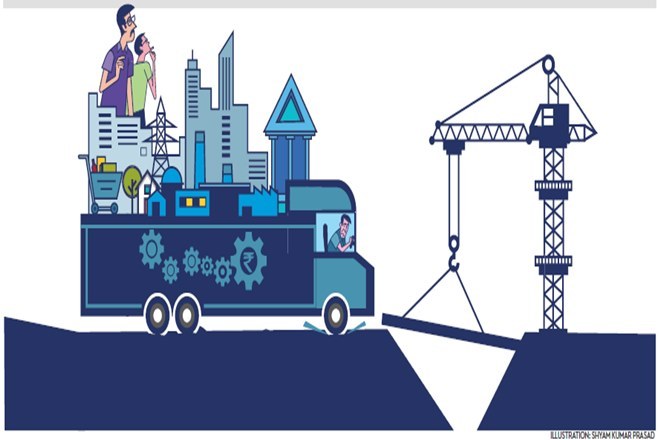

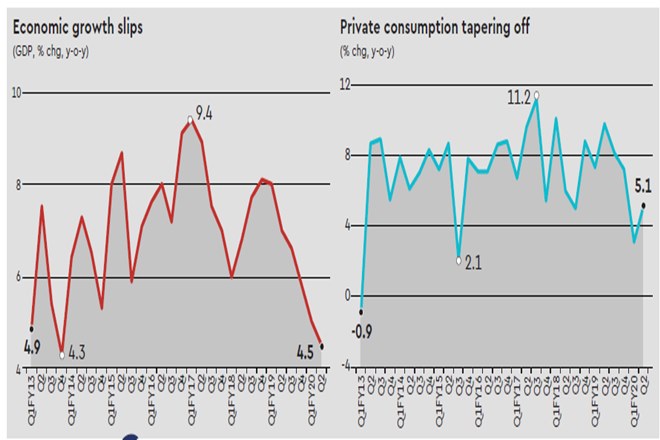
Budget 2020: All eyes will be on the Union Budget for measures to drive GDP growth, which has fallen to 4.5% in Q2FY20, a 26-quarter low; investment is also weak and consumption is tapering off. The fiscal space to stimulate the economy is very limited, leaving the government with difficult choices.
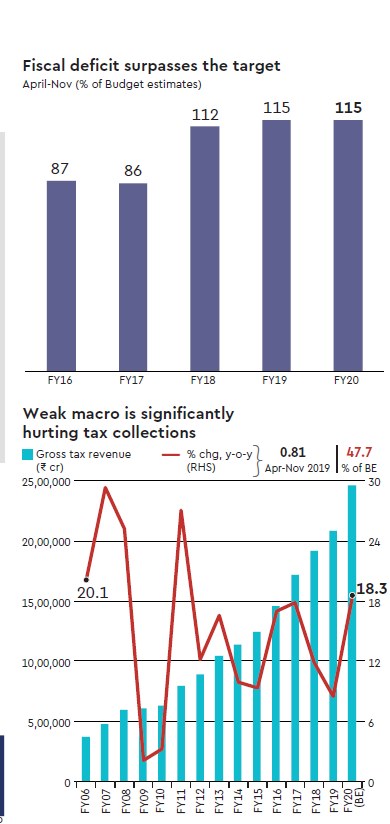
Fiscal deficit in the first eight months of FY20 (April-November) is 15%, above the budget target, because of weak revenues. Adhering to the budgeted fiscal deficit target of 3.3% of GDP seems to be a challenging task for the government, even though expenditure has been in line with the budget estimate.

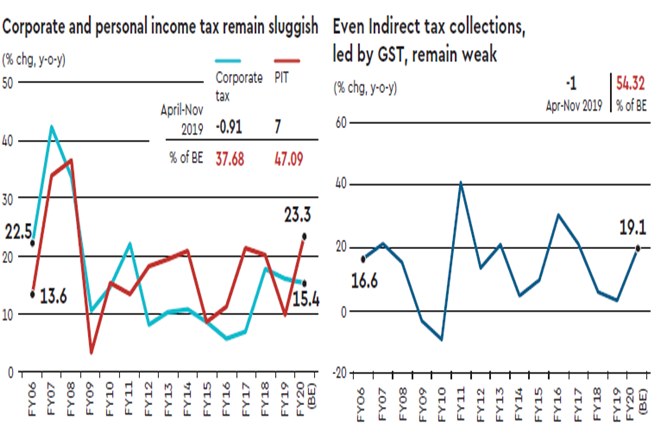
In FY20 (April-November), gross tax revenue grew a modest 0.8% year-on-year (y-o-y). Indirect tax collections contracted by 1% y-o-y on the back of subdued excise, customs and GST collections. In direct tax, while corporate tax contracted 0.9% y-o-y as the government had reduced the corporate tax rate in October, personal income tax grew 7% y-o-y.
Watch Video: What is Union Budget of India?
The non-debt capital receipts came in lower, at 24.21%, as of November, as compared with 28.5% in the corresponding period in FY19. The government has been able to raise only rS 18,100 crore through disinvestment till November which is just 17% of the budgeted target. The government is unlikely to complete the strategic sale of Bharat Petroleum Corporation Ltd and Air India before March this year.
To accommodate the revenue shortfall, the government will cut revenue expenditure in Q4 and may even defer subsidy payments. Following the corporate tax cuts, speculation is high that a reduction in personal income tax is on the cards next, which can boost private consumption, which is likely to grow at 9% in FY20, a 15-year low.