Honda Motorcycle & Scooter India (HMSI), the country’s second largest two-wheeler maker, has scrapped plans to invest ₹600 crore in a dedicated electric two-wheeler factory in Karnataka, putting its target of manufacturing one million electric vehicles (EVs) annually in the country by 2030 at risk and raising questions over Honda Motor’s global electrification ambitions.
According to multiple sources aware of the development, the company has scaled back its investment plans as it reassesses its EV strategy amid weak sales and intensifying competition from domestic manufacturers.
“The proposed dedicated factory has been scrapped, and Honda now plans to meet EV demand through its existing manufacturing facilities,” a source with direct knowledge of the development said. However, the source acknowledged that the existing plants would not have sufficient capacity to support an additional one million units of annual EV production if demand were to scale up substantially.
Honda had planned to establish the dedicated facility, known as Factory E, at its Narsapura plant in Karnataka. Scheduled to become operational in 2028, the factory was to have an initial annual production capacity of 600,000 units, with Honda targeting one million units annually by 2030 in line with projected market growth.
Queries sent to HMSI remained unanswered until press time.
Honda’s retreat comes even as India’s electric two-wheeler market gains momentum, with EV penetration reaching 6.5% in FY26 and sales exceeding 1.4 million units. Penetration is expected to approach double digits this financial year.
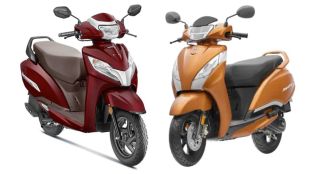
Despite its strong position in the conventional scooter and motorcycle market, HMSI has struggled to gain traction in the EV segment. The company launched the Activa e: and QC1 in February 2025 but sold just 4,312 electric two-wheelers in FY26, compared with 358,211 units sold by TVS Motor, 299,403 by Bajaj Auto, 254,502 by Ather Energy and 149,343 by Hero MotoCorp.
In July, HMSI president and chief executive Tsutsumu Otani said the company was recalibrating its EV strategy amid changing customer expectations and concerns over battery life and resale value.
The withdrawal from the dedicated factory raises concern over Honda’s ability to scale its EV business in India as rivals ramp up dedicated EV production capacity to capitalise on the market’s growth. TVS Motor plans to increase its annual capacity to 600,000 units, Bajaj Auto to 720,000 units and Ather Energy to 920,000 units.
The cancellation could also complicate Honda Motor’s global target of selling four million annual electric motorcycle sales, around 30 electric models and approximately ¥500 billion in investment in its electric motorcycle business over the decade ending 2030.
India was expected to play an important role in its electrification strategy, potentially serving as a manufacturing and export base for affordable electric two-wheelers in emerging markets. The proposed EV factory was intended to improve manufacturing efficiency, lower costs through commonised components and support the production of multiple electric models. Its cancellation raises questions about how Honda will achieve the scale and cost competitiveness needed to challenge established EV manufacturers.