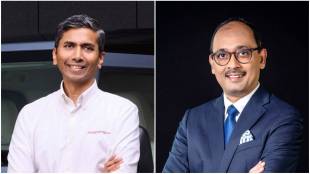
The automobile industry has broadly backed the government’s new Corporate Average Fuel Economy (CAFE-III) norms for giving manufacturers a predictable regulatory roadmap and flexibility to pursue multiple clean-technology pathways. Former NITI Aayog CEO Amitabh Kant, however, has taken the opposite view, calling the framework a “huge missed opportunity” and arguing that India’s fuel-efficiency rules should push the industry more decisively towards electric vehicles (EVs).
The industry’s support centres on the technology-neutral structure of CAFE-III, which recognises EVs, hybrids, alternative fuels and fuel-saving technologies while giving manufacturers greater flexibility in meeting their targets.
The industry lobby body Society of Indian Automobile Manufacturers (SIAM) welcomed the framework, calling it a “structured roadmap with aggressive annual targets for next 5-years” and highlighting the market-based compliance mechanism. It said the norms would help reduce overall fuel consumption while giving automakers flexibility to pursue different technology pathways and offer consumers greater choice.
Maruti Suzuki senior executive officer, corporate affairs, Rahul Bharti said CAFE-III recognises multiple powertrain technologies and fuels, encouraging “multi-faceted R&D and innovation”. He also described the credit-debit mechanism as an improvement over the previous CAFE-II regulation.
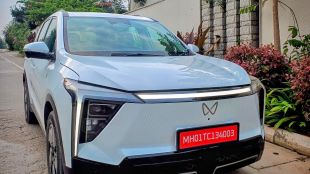
Mahindra & Mahindra president of automotive business Velusamy R said the framework strikes a “pragmatic balance” between what is necessary for the environment and what is achievable for industry, while strengthening India’s energy security.
“We also welcome the inclusion of a compliance block, technology credits, cleaner-fuel benefits and super credits for EVs and other advanced technologies,” he said.
Hyundai Motor India MD & CEO Tarun Garg said the norms provide a clear and predictable regulatory roadmap through a 3+2 year compliance structure, allowing manufacturers to undertake long-term product and technology planning with greater certainty. The framework, he said, adopts a technology-neutral approach covering electrification, alternative fuels and advanced fuel-saving technologies.
Toyota Kirloskar Motor country head and executive vice-president Vikram Gulati also backed the multi-pathway approach, saying CAFE-III recognises battery electric vehicles (BEVs), range extenders, plug-in hybrids, strong hybrids and flex-fuel vehicles. He said this would help reduce dependence on imported fossil fuels by combining hybrids, electricity and indigenous biofuels.
Tata Motors Passenger Vehicles MD & CEO Shailesh Chandra, which has a significant EV presence, also welcomed the framework while stressing the importance of electrification. He said the continued recognition of zero-emission technologies “reinforces the critical role of electrification in achieving India’s long-term decarbonisation objectives”.
Kant, however, argues that the same technology flexibility welcomed by automakers risks weakening the regulatory push towards EVs.
“This was an opportunity to technologically leapfrog like India has done with UPI & Smartphones. Instead, it is a case of a huge missed opportunity. The new CAFE norms are backward looking at worst and status quoist at best. They lack vision and a clear road map for the future. The regulation follows the industry instead of leading it,” Kant said.
“EVs become one option among many, when they should be the destination,” he added.
His criticism is also rooted in India’s dependence on imported oil. “We import almost 90% of our oil. We are building battery and EV manufacturing capacity. Our fuel-efficiency rules should push the industry toward that future, not give it room to delay,” Kant said.
Kant further questioned the EV trajectory under CAFE-III, saying the norms target 11% electric cars by 2032 when EVs are already close to 8% of car sales in the current financial year. He also questioned the provision allowing the Bureau of Energy Efficiency (BEE) to sell compliance credits.
“How can BEE sell credits? A regulator can’t be a player in the market it regulates,” he said.
The opposing views underline the central debate around CAFE-III: the industry sees technology flexibility as necessary to manage India’s transition, while Kant argues that the regulation should be used to accelerate, rather than accommodate, the shift towards electric mobility.