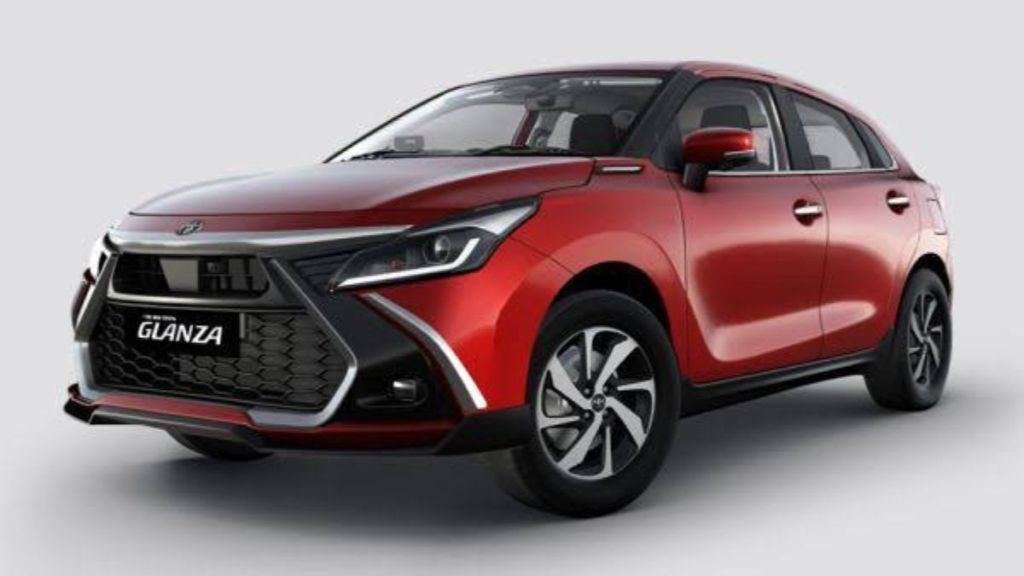
Earlier this week, when Toyota Kirloskar Motor launched the Glanza facelift – a rebadged version of the Maruti Suzuki Baleno facelift launched in September – the pricing structure raised a lot of questions, both at the launch and on the social media. The Glanza starts at Rs 6.99 lakh, as compared to the Baleno’s Rs 5.99 lakh. Top-end variants of both the models have a similar difference – the Glanza V(O) AMT costs Rs 10.98 lakh, as compared to the Baleno Alpha (O) AGS priced at Rs 9.99 lakh.
Under their global tie-up, Suzuki and Toyota are codeveloping cars; these have a similar body shell and powertrains, but different design language. The glaring price difference, however, boils down to brand licensing and royalties, as well as corporate margins and positioning.
Taking the example of Baleno-Glanza, a former auto sector CXO told FE that, in this case, Toyota is paying licensing and structural fees to sell a car built around Maruti Suzuki’s intellectual property, but the vast price difference of Rs 1 lakh is primarily due to brand positioning. “In India, Toyota enjoys a corporate pricing and retail margin structure that typically positions its products slightly higher to protect its premium brand perception,” he said. “This difference is seen in all the cars they share.”
Other models
Maruti Suzuki’s Fronx is priced from Rs 6.9 lakh to Rs 12.03 lakh, whereas its Toyota version, the Taisor, costs Rs 7.43-12.94 lakh. Moving up the ladder, the Maruti Suzuki Grand Vitara is priced Rs 10.77-19.77 lakh, whereas the Toyota Hyryder costs Rs 12.82-20.19 lakh. Coming to MPVs, the Maruti Suzuki Ertiga costs Rs 8.9-13.14 lakh, whereas the Toyota Rumion sells at Rs 9.79-14.21 lakh.
Even at the absolute top, the difference remains – the Maruti Suzuki Invicto hybrid costs Rs 25.02-28.8 lakh, less than the Toyota Innova Hycross hybrid (Rs 26.76-32.95 lakh) on which the Invicto is based. In this segment, however, there is a catch – the Invicto is only offered as a strong hybrid, whereas the Hycross is also available as a petrol-only model priced much lower at Rs 18.7-21.12 lakh.
“Maruti Suzuki limits the Invicto strictly to a strong-hybrid setup to keep its upscale Nexa network positioned at the upper end of the market, and far away from the top variants of its own premium but smaller MPV, the XL6,” the executive said. “Toyota, on the other hand, has a lot of white space between the Rumion and the Hycross hybrid, and therefore the Hycross petrol-only model covers that white space to an extent.”
Commenting on this difference, Prof S Subramanian, Strategic Management, IIM Kozhikode, said that in modern badge engineering, retail valuation is rarely dictated solely by sheet metal thickness, but consumers are fundamentally paying for perceived network reliability, long-term ownership trust, and the intangible cachet of a global brand logo. “The way you are treated in a Toyota showroom is also different from the way you’re treated elsewhere,” he said. “Toyota knows this, and that’s why it designs its products to look slightly upscale. For example, while the Baleno looks premium, the Glanza looks a step-up over the Baleno, with its assertive front face design and bold grille styling, which reminds one of the previous generation of the rugged Hilux pickup and the flagship Hycross MPV.”
Pointers
Toyota commands a distinct financial markup over its Maruti counterparts, driven by global licensing and brand positioning.
Design tweaks like the Hilux-inspired grille give the Glanza a more upscale visual stance than the Baleno.
Shared models across the portfolio maintain consistent price differences, reflecting inter-company supply agreements and retail margins.
Toyota has a lot of white space between the Rumion and the Hycross hybrid, and therefore the Hycross petrol-only model covers that white space to an extent.
Consumer pricing is driven less by sheet metal and more by perceived reliability, ownership trust, and brand value.