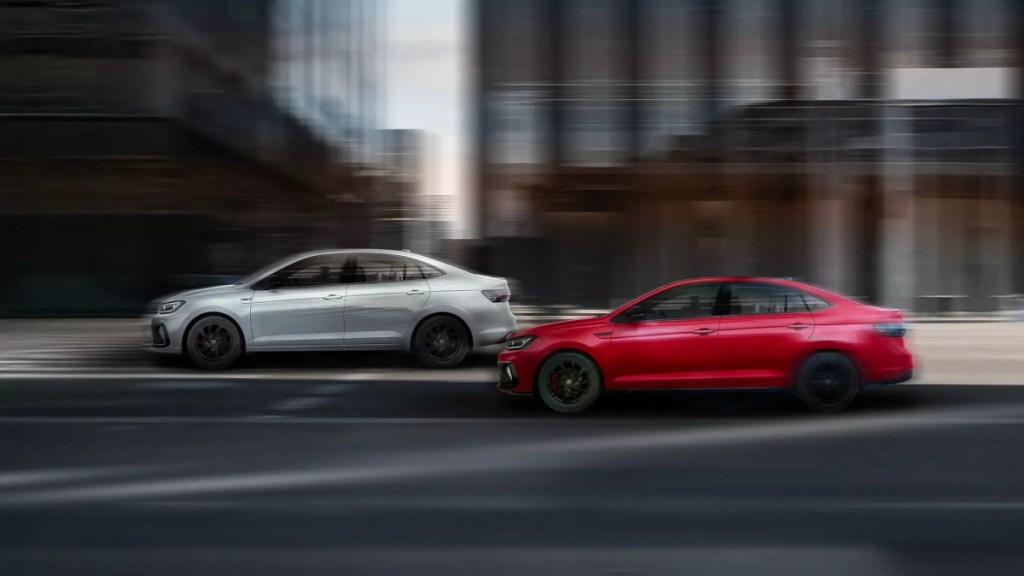
With Skoda set to launch the Slavia facelift in early October and Volkswagen expected to debut the Virtus facelift shortly afterwards, the European duo is banking on the festive season, refreshed styling, updated tech, and new features to keep the sedan alive.
They follow two other sedan updates this year — the new Hyundai Verna launched in March starting at Rs 10.98 lakh, and the new Honda City introduced in May from Rs 11.99 lakh onwards.
Yet, despite four updated sedans hitting the market in a single year, automotive analysts and recent sales trends suggest these launches offer nothing more than a temporary spike.
Sales data from January to August shows a repeating pattern: facelifts give an immediate wholesale boost to dealer inventory, but retail demand plummets the very next month.
For example, when Hyundai launched the updated Verna in March, dispatches to dealers doubled to 1,399 units from 694 units in February. By April, however, volumes dropped to 865 units, eventually bottoming out at 529 in August.
Similarly, Honda’s City facelift in May led to dealer dispatches surging to 1,227 units (up from an April low of 177). By August, however, City dispatches collapsed back to 514 units. Industry watchers expect a similar short-term trajectory for the upcoming Slavia and Virtus facelifts.
Gaurav Vangaal, associate director, LVP forecasting, Mobility Global, told FE that despite facelifts, it is tough for sedans to make a comeback. “It has been a trend that sales marginally rise for a few months with each new launch/facelift of a sedan — as we saw with the all-new Hyundai Verna way back in 2023, and before that in 2022 when Skoda introduced the Slavia and Volkswagen launched the Virtus, but then they eventually taper,” Vangaal said. “The market has wholly shifted to SUVs, and midsize sedans, in particular, cater to a few driving enthusiasts, but that’s about it.”
But in this dying segment, there is an outlier. Among the 286,268 total sedan sales between January and August, Maruti Suzuki’s Dzire has sold 168,413 units, and is on track to become India’s single largest-selling passenger vehicle in 2026.
But remove the Dzire, and the rest of the sedan market has collapsed. Among entry-level sedans, the Hyundai Aura has sold 49,517 units, the Honda Amaze 26,676 units, and the Tata Tigor 7,504 units. Among midsize sedans, the Virtus has sold 12,010 units, the Slavia 9,171 units, the Verna 6,324 units, and the City 5,065 units.
This decline is rooted in a fundamental shift in consumer preference towards high driving positions, commanding road presence, and high ground clearance. Entry-level buyers who once upgraded to midsize sedans are now jumping straight to compact crossover SUVs — a shift that claimed its first major casualty last year when Maruti Suzuki discontinued the Ciaz after its FY26 sales plummeted to just 1,980 units.