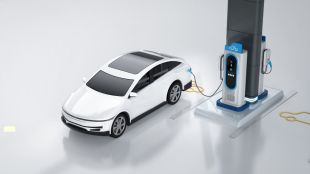
When it comes to buying and driving an electric vehicle (EV) in India, geography continues to dictate peace of mind. The latest HERE-SBD EV Index 2026 reveals a dramatic shift at the top: Telangana has surged from 25th position to rank as India’s most EV-friendly state, dethroning previous leader Chandigarh, while Delhi has fallen from fourth to 17th place. At the bottom end, Northeastern states — led by Nagaland and Arunachal Pradesh — remain among the hardest places in India to live with an EV.
The HERE-SBD EV Index 2026 noted that India added 31,500 public chargers this year and the average power rose from 32 kW to 45 kW.
Quantity vs. Quality
However, a deeper look at the data reveals gaps between study rankings and real-world consumer experience. For instance, for an EV driver, plugging in at a well-lit highway petrol pump with washrooms and food stalls is a world away from hunting down an isolated unit in an unlit lot. Yet, national datasets do not separate chargers by location type.
Abhijit Sengupta, Senior Director & Head of Business (India & SEA) at HERE Technologies, confirms that the index tracks total public volume without categorising installation sites: “We do not currently publish a breakdown of charging infrastructure by venue type, such as petrol stations versus other charging locations.”
Without tracking whether chargers are at petrol pumps, retail hubs, or remote parking spaces, macro rankings count hardware while remaining blind to driver safety and operational convenience.
Regional Infrastructure Disparities
While Nagaland is at the bottom of the chargers-per-road-length index, Sengupta cautions against confusing low density with having the absolute fewest chargers. “The Index evaluates charging infrastructure relative to factors such as road network length and EV adoption,” Sengupta says. “Therefore, we would not equate the lowest chargers-per-road-length score with the lowest number of chargers overall.”
However, government data reinforces the region’s overall struggle. Official Ministry of Heavy Industries statistics confirm that Northeastern states — including Mizoram, Nagaland, Arunachal Pradesh, Manipur, and Meghalaya — continue to lag with the least-developed public networks nationwide.
As far as charging speeds are concerned, for long-distance travel, charging speed matters far more than charger availability. The study evaluates broad state-level road coverage rather than dedicated highway corridors, masking a key structural hurdle: urban centres rely heavily on low-cost AC (Level 2) slow chargers, whereas interstate routes require high-power DC fast chargers to eliminate range anxiety.
Sengupta notes that while most markets start with low-power AC units due to deployment costs, maturing networks must pivot: “As these markets mature, they balance out by adding a denser mix of both high-power corridor charging and slow destination charging to support different driving habits.”
Lastly, while 87% of Indian consumers express strong interest in switching to electric mobility, raw charger expansion is no longer enough. The next phase of EV adoption will depend on fixing charger reliability, expanding highway DC fast-charging corridors, and bringing venue-level transparency to national data.