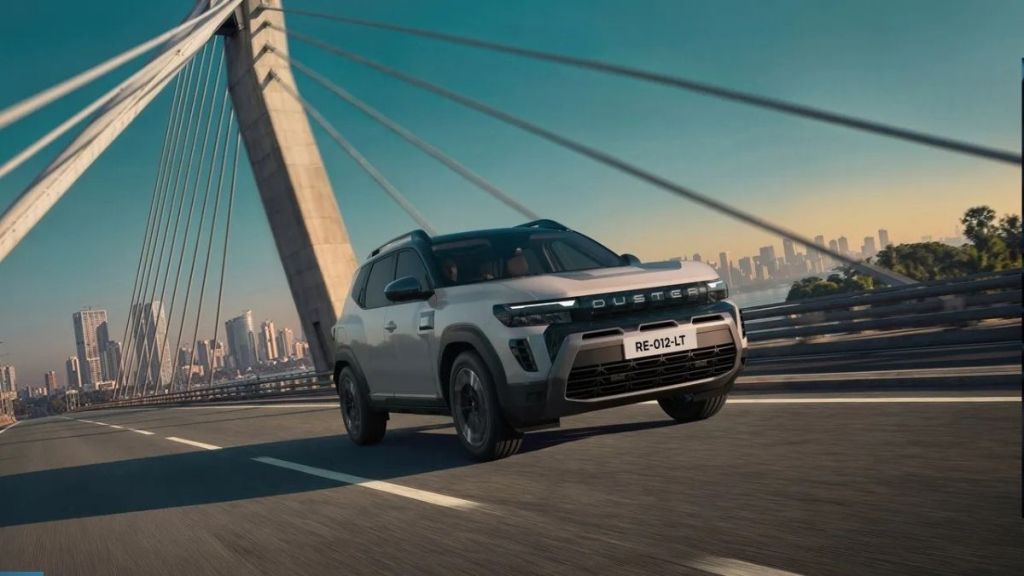
Renault will prioritise improving sales and dealership profitability across its existing network of around 300 outlets in India before expanding its retail footprint. The company does not see an immediate need to add significant retail capacity, with current sales volumes insufficient to support a larger dealership network. The brand currently sells the Duster, Kiger, Triber and the Kwid in India. Its combined monthly sales average for the first nine months of this year has been under 4,000 units.
Stephane Deblaise, CEO, Renault Group India, said, “Today, we don’t sell enough cars for them (dealerships).” The company is reviewing existing outlet locations and relocating dealerships wherever necessary, depending on local business conditions. “First, we introduce new cars. We make them more profitable,” he said, adding that, “Dealership needs to be profitable to go a long way ahead.”
Renault has recently launched the Duster hybrid, a niche offering in India, and plans dedicated advertising campaigns and workshop training to familiarise customers and dealership personnel with the technology. The company expects new products and stronger customer awareness to help improve sales through its existing retail network.
The brand is also adopting a case-by-case approach to support dealerships facing financial or operational difficulties, depending on the nature of the problem. “Dealers are partners,” Deblaise said, adding that the company would assess whether intervention is necessary or should individual dealers resolve their challenges independently.
Beyond the domestic market, Renault wants India to play a larger role in the group’s global operations, particularly in engineering, technology, component sourcing and vehicle exports. The company sees India’s cost competitiveness and engineering capabilities as important advantages in developing products for international markets.
“If you do a very good product in India, you become attractive in terms of technology for the rest of the group. And it is good for the rest of the group,” Deblaise said.
South Africa, the Gulf region and Latin America are among the key export markets being considered for India-built vehicles and components. Latin America is particularly important, given India’s competitive manufacturing costs and similarities in product requirements in markets such as Brazil and Colombia.
“Latin America, for us, is a key market of export because India is very competitive in terms of cost,” Deblaise said.
Renault exports both completely built vehicles and components for local assembly overseas. The company uses completely knocked-down (CKD) shipments, particularly for products based on the Kwid platform, which has gained traction in Brazil. Europe, however, is not currently a target market for India-built vehicles, although the company could consider opportunities individually.
Renault is also refraining from positioning its India strategy around a headline investment announcement, instead focusing on products and better utilisation of existing facilities. “We prefer to communicate on products we do rather than on investment,” Deblaise said. “Try to make the most of what we have right now. That’s what makes sense,” he added.