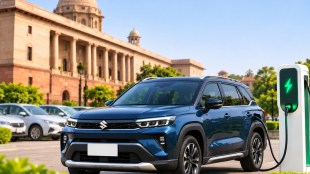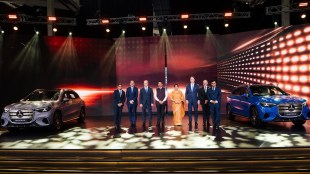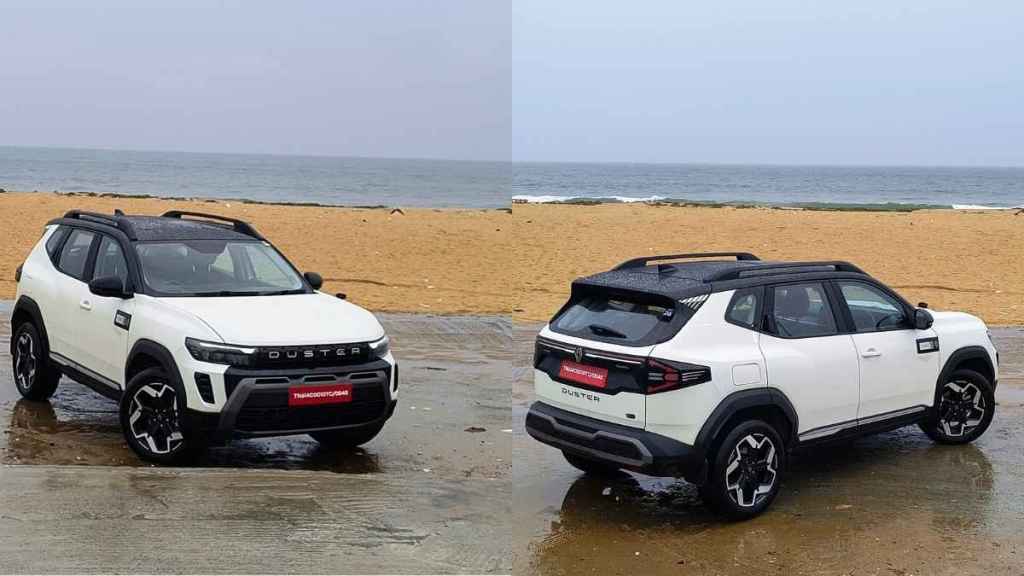
Can a brand attempt a second coming within a second coming? Renault India launched the Duster strong hybrid on October 17, with ex-showroom pricing from Rs 16.99 lakh to Rs 19.49 lakh – just seven months after the nameplate was revived with 1.0-litre and 1.3-litre turbo-petrol engines, but with muted customer interest (sales of just 7,422 units in seven months). Can this hybrid spark revive the legend? We tested it across diverse terrains to see if it can reclaim the throne once held by the original Duster.
Hybrid in motion
Putting the E-Tech hybrid — which pairs a 1.8-litre petrol engine with a dual-motor and a 1.4 kWh battery for a combined 160 PS — through real-world testing reveals a sound machine. Driving in dense traffic, the hybrid powertrain shines. Navigating bumper-to-bumper traffic without the AC led to an astonishing 30.3 km/litre, which reduced to 25 km/litre with the AC.
Because the system handles city driving primarily on silent electric power – and the petrol to electric and vice-versa transition is smooth – city commute is easy. On the highway, fuel efficiency drops. During our 100 km run at 80-90 km/h, it returned 20 km/litre — because the powerful 1.8-litre engine takes over at high speeds. Unlike the base 1.0-litre Duster that can feel underpowered, or the 1.3-litre turbo that demands aggressive driving to find its sweet spot, the hybrid hits the gold standard of well-rounded performance.
How it feels inside
The EV mode is whisper-quiet, but if you accelerate hard, the engine produces a growl – the acceleration is intense, and we recorded a sprint from 0-100 km/h in 10 seconds. The cabin is roomy, seats are well-bolstered and firm, the stitching on doors and dashboard is neat, and like most SUVs, the Duster hybrid has an elevated driving position (you can lower the seat as well).
Where it cuts corners
While top-end variants of the 1.3-litre petrol have features like Google-integrated infotainment, rain-sensing wipers, auto-dimming IRVM, hill descent control, a 360-degree camera, and ADAS, we couldn’t find these on the hybrid (possibly to cut costs), and the reversing camera’s image quality is grainy. What are also missing are a proper spare wheel, driver’s seat memory function, rear sunblinds, and reclining rear seats.
The rival hybrids
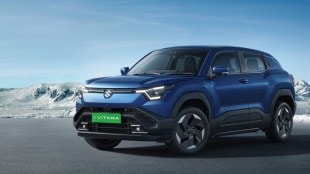
Compared to established names like the Toyota Urban Cruiser Hyryder (Rs 17.18-20.19 lakh), Maruti Suzuki Grand Vitara (Rs 16.68-19.77 lakh) and Victoris (Rs 16.43-19.99 lakh), and Honda City e:HEV (Rs 21.44 lakh), the Duster hybrid seems to have an edge in some areas but trails in others. Both the Grand Vitara and Hyryder are hybrid benchmarks. During our driving tests previously across Rajasthan and around Bengaluru, these co-developed SUVs impressed with real-world efficiency touching 22-24 km/litre. But both – launched in 2022 – have started to look dated and need a facelift to stay relevant.
The Victoris hybrid, however, seems to have an edge over the Duster hybrid – the nameplate has sold over 100,000 units in a year, the brand value is solid, and it’s backed by Maruti Suzuki’s vast Arena network. The City e:HEV is expensive and caters to a niche set of sedan-loving buyers.
What works for the Duster hybrid is an aggressive price tag (Rs 16.99-19.49 lakh), a segment-best claimed fuel efficiency of 29 km/litre, robust build quality, and superior power (160 PS). To succeed, a brand needs to exceed its own benchmarks, and while the hybrid does so without sacrificing the original Duster’s torquey character, the missing features and cost-cutting mean buyers will have to weigh its raw mechanical appeal against some cabin omissions.