Domestic passenger vehicle sales rose 12.4% year-on-year to 5,28,384 units in October, crossing 5,20,000 units for the first time in the current financial year, as strong festive demand lifted purchases across segments. Maruti Suzuki and Tata Motors outpaced industry growth, while Mahindra reported relatively modest expansion despite recording its highest-ever monthly SUV sales.
Maruti Suzuki’s domestic passenger vehicle sales rose 20.5% to 2,12,384 units from 1,76,318 units a year earlier, while Tata Motors reported a 20.9% increase to 73,894 units from 61,134 units. Hyundai Motor India’s sales grew 16.7% to 62,799 units from 53,792 units. Mahindra’s SUV sales increased 2.4% to 73,338 units from 71,624 units.
The divergence in growth highlights how manufacturers are benefiting differently from the demand recovery. Maruti Suzuki and Tata Motors recorded stronger growth across their portfolios, while Mahindra’s relatively modest increase reflects a high base in the SUV segment, which accounts for the bulk of its passenger vehicle sales.
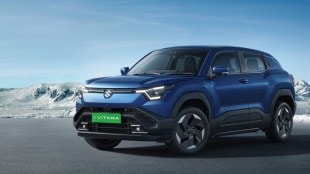
Maruti Suzuki reported its highest-ever monthly domestic passenger vehicle sales in October, but the broader demand picture also points to supply constraints. Dealer inventory stood at just 12 days, while pending bookings were around 2.45 lakh vehicles, indicating that the company is still struggling to fully meet demand.
The automaker expects to gain at least two percentage points in market share, building on its approximately 40% share in FY26, as demand for small cars and SUVs supports volumes.
“We expect to gain the market share by at least 2%, but we have to wait and watch till all the numbers come,” said Partho Banerjee, senior executive officer, marketing and sales, Maruti Suzuki India.
The company expects to sustain double-digit growth in FY27, although fewer working days in November due to festivals could constrain production and vehicle dispatches.
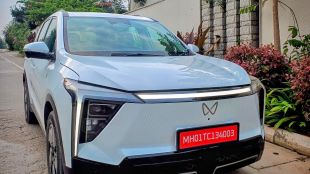
Mahindra attributed its record monthly SUV sales to strong festive demand and a refreshed product portfolio.
“The festive season, together with a refreshed portfolio, kept demand strong across SUVs, pick-ups and three-wheelers. Our first CNG vehicle, the XUV 3XO ZNG has also seen strong traction with customers,” said Dr Velusamy R, president, automotive business, Mahindra & Mahindra.
Hyundai Motor India said festive demand and export momentum contributed to its performance.
“Strong festive demand, coupled with healthy momentum in both domestic and export markets, helped us set this new sales record. Going forward, the newly launched Hyundai BAYON – our Intelligent Utility Vehicle, will provide further impetus to our growth,” said Tarun Garg, managing director and CEO, Hyundai Motor India.
However, sustaining the October momentum could prove challenging in the coming months. The year-on-year growth figures will face a higher base of comparison following strong festive-season sales in the corresponding period last year. Demand could also moderate after the festival-led buying cycle, making it harder for automakers to maintain the current pace of growth.
Rising commodity prices are adding to the pressure, with manufacturers indicating the possibility of further vehicle price increases.
Maruti Suzuki, which has already implemented three price hikes this year, said it could consider calibrated increases if input costs remain elevated. Higher vehicle prices could weigh on affordability and make it harder for automakers to sustain sales momentum.