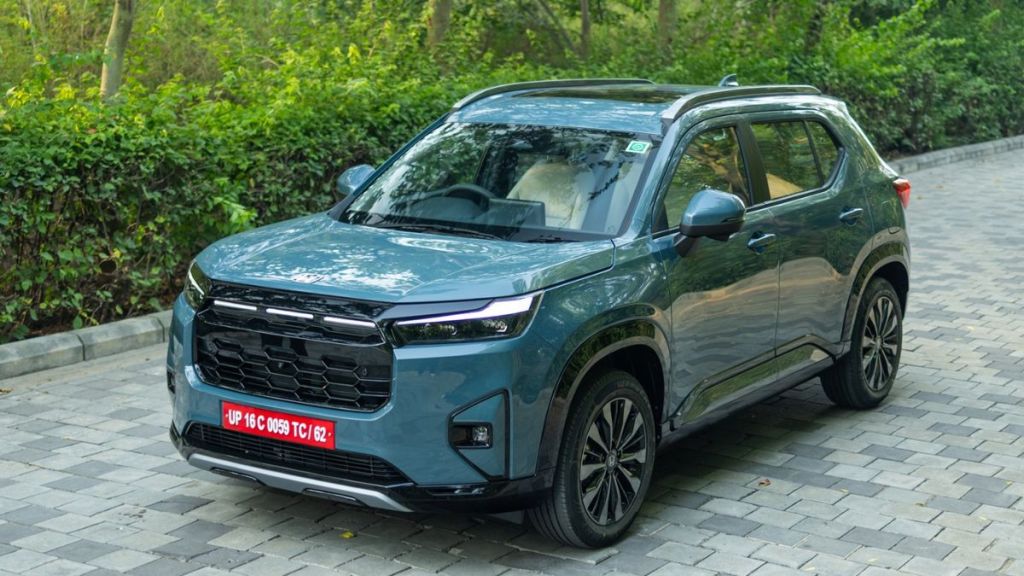
When I tested the original Elevate, it was clear that Honda had finally built an SUV tailored for Indian roads, though it lacked the visual appeal to take away buyers from the likes of Hyundai Creta or Kia Seltos. Now, driving the new Honda Elevate facelift on the Delhi-Mumbai Expressway — with a punishing detour across broken rural roads near Sariska in Rajasthan — the verdict is clear: A lot improved, a little more needed.
Fresh stance, spot-on ride
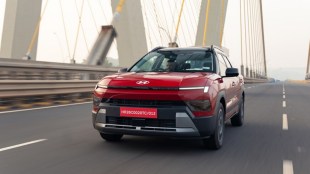
The facelift brings much-needed visual freshness to counter flashier rivals like the Seltos or Sierra – or even the upcoming Hyundai Bayon. The front fascia has a bold mesh grille with gloss black upper-moulding and a striking tri-bar LED strip running headlight-to-headlight, giving it good road presence. At the rear, the connected LED tail lamps add a contemporary touch. While it may not look as dominating as a Seltos, it looks neat parked next to a Creta or Grand Vitara, and while I was driving it, there were instances of curious onlookers pulling out their phones and taking pictures.
Out on the expressway, the ride quality is effortlessly planted. Cruising at 120 km/h, the SUV remains exceptionally stable on its 17-inch diamond-cut alloy wheels. Hitting bridge expansion joints at high speeds doesn’t send it bouncing or losing traction the way heavier ladder-frame SUVs like the Scorpio do. The steering offers accurate feedback, and the Honda Sensing Level 2 ADAS makes driving on highways comfortable. The Low-Speed Follow (LSF) function on my test car (CVT automatic) made driving through bumper-to-bumper traffic stress-free. Over broken rural roads, the suspension neatly absorbed undulations without sharp thuds, and its 220 mm ground clearance ensured it almost flew past rural road undulations.
Real-world efficiency is another strong point. I tested it over 300 km (almost 150 km on the expressway, and another 150 km on state highways and broken rural roads), where it returned a creditable 13 km/litre. Cabin space is good enough for five adults, complemented by a large boot, good headroom, and very good thigh support. Although my test unit was equipped with ventilated seats, the seats didn’t cool as much as I would have wanted in punishing Rajasthani summers.
What’s missing?
The exterior is spot-on, but the cabin feels a bit dated. While competitor midsize SUVs have colourful touchscreen layouts and lavish interiors, the Elevate’s 26.03 cm touchscreen is way too black and white, and the information cluster is basic. The 8-speaker audio system also trails segment benchmarks, and the single-pane sunroof lacks the ‘wow’ factor of panoramic units found on some competitors.
Under the hood, the proven 1.5-litre naturally aspirated i-VTEC petrol engine produces 121 PS and 145 Nm of torque, and is efficient to the core, but the 7-speed CVT tends to groan under hard acceleration without delivering a thrilling surge. The 6-speed manual gearbox variant is quite a smooth shifter.
While Honda offers a strong-hybrid powertrain in the City sedan, I strongly believe that the Elevate would have been a better candidate for a strong hybrid. Basically, because it doesn’t have diesel, CNG, turbo-petrol, or hybrid options, the pool of buyers the Elevate is catering to is quite small.
Verdict
Priced competitively from Rs 11.8 lakh to Rs 18.4 lakh (ex-showroom) across its manual and CVT trims, the facelift makes the Elevate a sharper, safer, and more mature package, even if it leaves enthusiasts wanting a bit more mechanical spice and a broader powertrain choice.