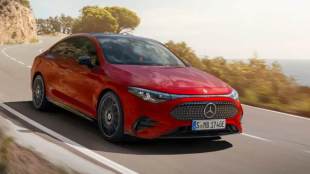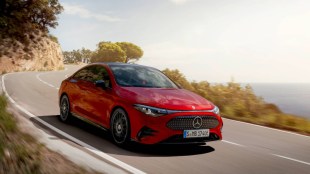
Mercedes-Benz is looking to tap two emerging growth opportunities in India with the first one being the expansion of the overall luxury car market and rising demand for premium electric vehicles. The German automaker sees significant headroom to scale up its business over the next five to seven years.
The company’s latest electric SUV, the GLC EV, has received over 1,000 bookings in record time, taking its order book through March 2027. The strong initial response has prompted Mercedes-Benz India to approach its global leadership for additional assembly kits to increase local production and bring down waiting periods.
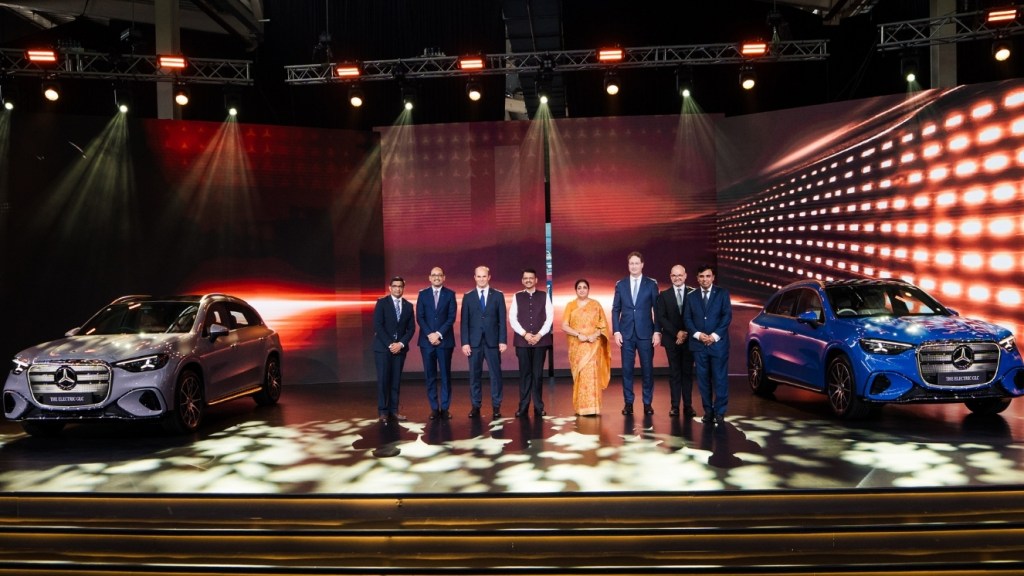
“We have got 1,000-plus bookings of this SUV now,” Santosh Iyer, managing director and CEO of Mercedes-Benz India, said at the launch of the electric GLC in Pune. Priced at an introductory ₹78,50,000 (ex-showroom), the SUV is locally assembled, with deliveries to initial customers beginning in the coming days.
Iyer said the company was approaching its global leadership for “more cars, more kits, so that we can produce more here”.
Luxury market offers good headroom
Mercedes-Benz chairman Ola Källenius said India remained a promising market for the company, with considerable scope to grow beyond its current sales levels. The automaker has just recorded its best-ever quarter in India and expects to finish the year strongly.
Källenius said India’s passenger vehicle market was approximately five million units, while the premium luxury segment accounted for just over 1%, or around 60,000 vehicles. With Mercedes selling approximately 20,000 vehicles, it commands nearly a third of this segment.
However, he believes India’s economic growth and rising purchasing power could significantly expand the luxury car market over the next five to seven years.
“We believe, based upon projections around GDP growth, what we think that the market in India can be in the next 5, 6, 7 years, that we can significantly grow from that number upwards,” he said.
On the possibility of entering lower price segments to expand its addressable market, Källenius said no decision had been taken yet, although he remained optimistic about the opportunity.
EV portfolio to drive growth
The GLC EV’s initial response comes as Mercedes expands its electric portfolio in India. Iyer has indicated that EVs could account for 25-30% of the company’s sales, provided adequate supplies are available.
Källenius said electric vehicles were poised to gain momentum as the company expanded customer choice across segments. The electric CLA and GLC are part of Mercedes-Benz’s global programme to introduce 40 models over three years, spanning electric and combustion-engine vehicles.
“I can see that the electric side is going to start taking off in a bigger way now,” he said.
Despite its electric push, Mercedes-Benz doesn’t intend to discontinue diesel engines in the foreseeable future, particularly for high-mileage customers. Källenius said, “diesel still remains an efficient option for customers covering 60,000-70,000 km annually.” underlining the company’s multi-powertrain approach to the Indian market.