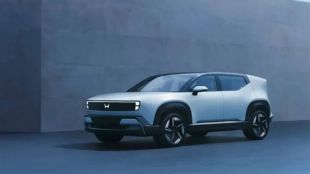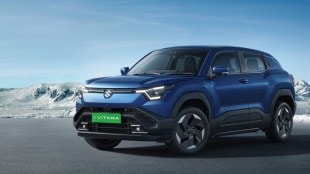
Maruti Suzuki India has exported more than 50,000 units of its electric sport utility vehicle (SUV), the e-Vitara, since shipments began in August 2025, even as domestic sales of the model remain below 12,000 units since its launch. The gap highlights the automaker’s dependence on overseas markets to scale up its electric vehicle (EV) business, even as it struggles to gain comparable traction at home.
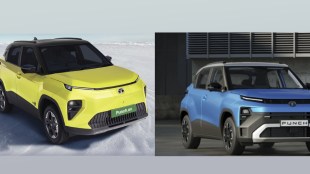
Electric passenger vehicle penetration in the country has been rising steadily, reaching 8.5% in September, with sales of around 36,100 units, nearly double the 18,500 units reported in September last year. Maruti Suzuki, however, has been slow to gain ground in the segment, selling around 1,100 electric cars in September, compared with nearly 14,700 units sold by eclectic car market leader Tata Motors.
Unlike its strong presence in the petrol-powered small-car and SUV markets, Maruti Suzuki entered the battery electric passenger vehicle segment relatively late, with the e-Vitara marking its first offering in the category.
The country’s largest carmaker is increasingly relying on exports to build scale for its first electric car. Maruti Suzuki accounted for nearly 93% of the country’s electric passenger vehicle exports during April-September 2026, according to the company. Europe remains the largest destination for the e-Vitara, which is now shipped to nearly 50 countries, including the UK, Norway, Germany, Japan and Switzerland.
“Today, Maruti Suzuki exports EVs to nearly 50 of these countries, with Europe being the largest destination. In April-September 2026, Maruti Suzuki accounted for nearly 93% of India’s electric passenger vehicle exports. This milestone reflects India’s advanced manufacturing capabilities and its growing competitiveness,” Hisashi Takeuchi, managing director and chief executive officer of Maruti Suzuki India, said.
The company has positioned the e-Vitara as a global product, intended for sale in more than 100 countries.
In FY26 also Maruti was the lead exporter in EV space. The company is the country’s largest passenger vehicle exporter overall, a position it has held for five consecutive years. It accounted for more than 50% of India’s passenger vehicle exports during the first half of FY27.
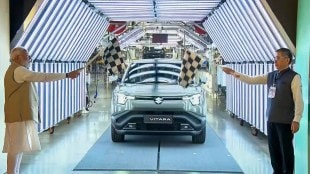
The e-Vitara is manufactured exclusively at the company’s Hansalpur facility in Gujarat, which serves as the global production base for Suzuki’s first battery electric vehicle. The facility recently expanded its annual production capacity to one million vehicles, becoming the first Suzuki manufacturing plant globally to achieve that capacity at a single location.
With cumulative investments of ₹25,289 crore, Hansalpur has emerged as a key export hub for Maruti Suzuki, accounting for nearly half of its overall overseas shipments in FY26. The company currently exports 16 models to nearly 120 countries.