Hyundai Motor India aims to sell at least 2,50,000 units annually from its Creta and newly launched Bayon in the mid-size SUV segment, as it looks to strengthen its position in a market where competition is intensifying and sales of its flagship SUV have come under pressure.
“We are looking at a volume of over 250,000 per annum in CY27. And 250,000 units is not a limit; it is a baseline. We will continue to grow,” managing director and chief executive officer Tarun Garg said.
Launched at an introductory price of Rs 9.99 lakh (ex-showroom), the Bayon is Hyundai’s second offering in the segment and its first new nameplate in the category since the Creta’s launch in 2015. Positioned between the Venue and Creta, the new model is intended to expand Hyundai’s reach among buyers while reducing its dependence on a single product in the segment.
The mid-size utility vehicle segment, comprising SUVs and MPVs measuring 4-4.4 metres in length, sold 9,19,189 units in FY26, according to data from the Society of Indian Automobile Manufacturers (SIAM). Hyundai sold around 2,01,921 Creta, with the model accounting for nearly 35% of the company’s domestic sales in FY26. The company targets to sell 1,70,000 units of Creta this year.
Hyundai believes the segment has sufficient headroom to accommodate both models. Industry projections suggest average monthly volumes in the mid-SUV segment will rise 64% to 118,000 units by 2032 from 72,000 in 2026.
However, the addition of the Bayon comes as the Creta faces mounting competition. Creta sales declined 9.7% year-on-year to 89,727 units in the first six months of FY27, even as segment volumes grew more than 50%.
Garg attributed the decline partly to supply constraints, particularly for diesel variants, which have a waiting period of more than a month.
The Bayon will initially be offered with a petrol engine, with a CNG variant planned for early next year. Hyundai has no current plans to introduce diesel or electric versions of the model. Garg said market research indicates that petrol will account for the largest share of demand in the segment. Offering multiple powertrains in every model could also complicate the product range and confuse buyers, he added.
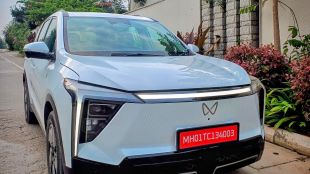
Competition in the segment has expanded, with Maruti Suzuki offering the Grand Vitara, Victoris and Ertiga, while Tata Motors has the Curvv and Sierra. Other competitors include Kia’s Seltos, Toyota’s Urban Cruiser Hyryder, Mahindra & Mahindra’s BE 6, Skoda’s Kushaq, Volkswagen’s Taigun and JSW MG Motor’s Astor.
Hyundai will manufacture the Bayon at its Chennai plant. Garg said the model would help improve utilisation at the facility following the transfer of Venue production to Pune.
Earlier this month, Hyundai Motor committed to investing $15.5 billion in India by 2032. Hyundai Motor India plans to introduce 26 models by the end of the decade, including 20 internal combustion engine vehicles and six electric vehicles, through new launches, full model changes and product upgrades.