Hyundai Motor India is stepping up its product, capacity and export plans as it looks to regain momentum in the domestic passenger vehicle market, with the company expecting electric vehicles (EVs) to account for around 7-8% of its sales next fiscal and exports to rise to nearly 30% of production over the next five years.
Hyundai, which has historically held the second position in the country’s passenger vehicle market, slipped to fourth place in FY26. Against this backdrop, the automaker is accelerating capacity expansion, preparing new EVs and betting on a wider mix of petrol, diesel, CNG, hybrid and electric powertrains rather than committing to a single technology.
“Contribution of EVs to Hyundai sales could also be around close to 7 to 8% is what I’m saying,” said Tarun Garg, Managing Director and CEO, Hyundai Motor India.
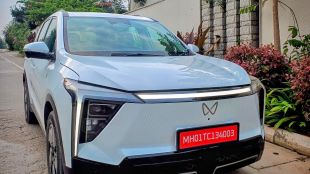
Hyundai is also preparing what it described as its first dedicated mass-market EV, which is expected to further expand its electric portfolio.
The company is simultaneously bringing forward production capacity additions. Hyundai currently has production capacity of around 9.94 lakh units a year and plans to take this to 11.44 lakh units by 2030.
The third shift at its Pune plant, which was earlier planned for 2028, has now been advanced to October 1, 2026, driven by demand in both domestic and export markets.
Hyundai is also increasing its dependence on exports. Exports accounted for around 20% of its production three years ago and have now risen to 24.5%. The company expects this to approach 30% over the next five years.
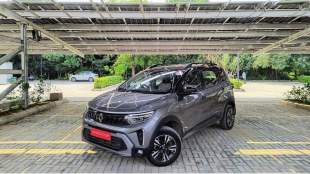
The company, however, is not abandoning conventional powertrains. Garg said Diesel continues to have a strong position in SUVs, with around 40% of Creta demand coming from diesel, while CNG remains strong in entry-level models.
Hyundai is also keeping hybrids under consideration, but sees localisation and pricing as critical hurdles.
“My bet is 80% of them would say hybrids,” the executive said, referring to consumers’ preferred technology. But when asked how many actually buy hybrids, the response was: “Not even 0.2%.”
The company said it has hybrid technology but will introduce it only when sufficient localisation allows it to offer a competitive price proposition.
Hyundai plans to maintain a technology-agnostic strategy through 2030, targeting a broadly equal mix of EVs, hybrids and CNG within a 50% “green” vehicle contribution, while continuing to offer petrol and diesel vehicles where customer demand remains strong.
“Different segments have different choices. Different geographies in India also have different choices,” the executive said.
The company is also accelerating its charging infrastructure plans, bringing forward its target of 600 fast chargers from 2032 to 2030. Around 180 are already operational.