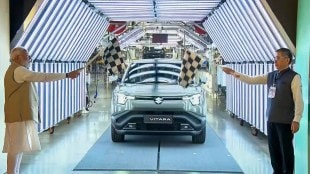
The passenger vehicle industry added nearly one million registrations in the 12 months following the introduction of GST 2.0, with utility vehicles accounting for nearly two-thirds of the incremental volumes as SUVs continued to outpace the broader market.
Passenger vehicle retail registrations rose 22% to 5.35 million during October 2025-September 2026, from 4.36 million in the corresponding period a year earlier, an increase of 994,758 units, according to an analysis of Vahan data. Utility vehicle registrations grew 25.3%, while the passenger car category recorded a more modest growth of 15.6%.
According to the Society of Indian Automobile Manufacturers (SIAM) data, within this utility vehicle category, the UV1 segment, which includes popular mid-size SUVs such as the Hyundai Creta, Maruti Suzuki Grand Vitara, Toyota Urban Cruiser Hyryder, Tata Sierra and Curvv, recorded the fastest growth, with registrations jumping 42.4% to 1.06 million from 746,166.
The growth was particularly notable because mid-size and larger SUVs fall under the 40% GST rate introduced on September 22, 2025. Despite not receiving the tax reduction available to qualifying small cars, the segment expanded significantly faster than the overall passenger vehicle market, highlighting the strength of consumer demand for SUVs.
While mid-size SUVs recorded the fastest growth, the biggest turnaround came in mini cars, where registrations rose 39% to 149,852 from 107,802, reversing a prolonged decline. The segment, comprising models such as Maruti Suzuki’s Alto and S-Presso, appears to have benefited from the GST cut on qualifying small cars from 28% to 18%, which improved affordability in the entry-level market.
GST 2.0 reduced the rate on qualifying small cars from 28% to 18%, benefiting petrol, LPG and CNG vehicles with engine capacities of up to 1,200 cc and lengths not exceeding 4,000 mm, as well as diesel cars with engine capacities of up to 1,500 cc within the same length limit. The move was aimed at improving affordability, particularly in the entry-level and compact car segments. For specified larger cars and utility vehicles, the government replaced the earlier 28% GST plus compensation cess structure with a flat 40% GST rate. While this simplified taxation and removed the additional cess.
The UVC segment, which includes several entry-level and sub-four-metre SUVs, grew 22% to 1.42 million registrations from 1.16 million. Several models competing in this space include the Hyundai Exter and Venue, Kia Sonet and Syros, Tata Nexon and Punch, and Maruti Suzuki Brezza and Fronx.
At the other end of the market, the larger SUVs and multi-purpose vehicles category saw the slowest growth among the utility vehicle categories, with registrations rising 12.1% to 755,979 from 674,621. This category includes vehicles such as the MG Hector, Hyundai Alcazar, Mahindra Scorpio and XUV700, and Tata Safari and Harrier, Toyota Vellfire.
Compact cars, which include hatchbacks and compact sedans such as the Hyundai i10 and i20, Maruti Suzuki Baleno and Swift, and Tata Tiago and Tigor, grew 15.5% to 1.25 million. Sedans remained the only segment to record a decline, with registrations falling 19.6% to 53,147 from 66,092.