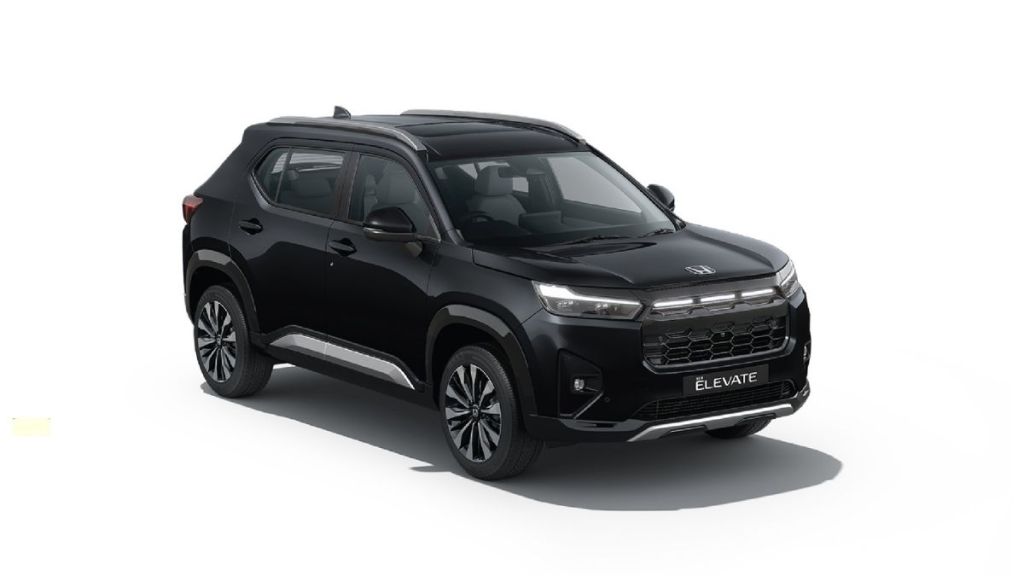
When Honda launched the Elevate in late 2023, it marked the Japanese automaker’s long-awaited foray into India’s lucrative midsize SUV segment, ruled by the likes of Creta and Seltos. But examining its sales data throws up a clear trajectory: initial excitement followed by a steady tapering.
A strong start, a quick taper
The Elevate saw initial demand surge, peaking at 5,685 units in September 2023. Volume remained reasonably stable till early 2024, with monthly sales consistently hovering between 4,300 and 4,900 units.
But by April 2024, dispatches dropped sharply, slipping to 1,731 units, and further to 1,553 units in May, before hitting a low of 1,340 units in July. The result was that the Elevate, which sold 22,595 units in five months of 2023, could manage just 27,656 units in 2024, and 21,308 units in 2025 – having recorded its lowest monthly sales in April 2025 when it dropped to just 935 units. Comparing this to segment juggernauts like the Creta – which sells over 15,000 units monthly – shows that the Elevate has settled into a corner rather than being a challenger.
A missed opportunity
The updated Elevate (priced from Rs 11.8 lakh to Rs 18.4 lakh) has a neat design, ventilated seating, electric parking brake, 360-degree camera, and low-speed follow for ADAS. But it continues with the 1.5-litre naturally aspirated i-VTEC petrol engine (121 PS and 145 Nm).
Honda already has the refined 1.5-litre e:HEV strong-hybrid powertrain in the City sedan, and an argument can be made that skipping this technology for the Elevate is a missed opportunity.
“Deploying the e:HEV strong hybrid in the Elevate would have given Honda a genuine edge in a market hungry for high fuel efficiency,” said Gaurav Vangaal, associate director, LVP Forecasting, Mobility Global. “But even with a hybrid powertrain, expecting the Elevate to challenge heavyweights like the Creta, Seltos, Sierra, or Victoris is overly optimistic. The broader challenge for Honda is that it still doesn’t fully grasp what the modern Indian car buyer truly wants — tech-laden, highly customised feature packages and multiple powertrain options. While the Elevate facelift will marginally increase monthly sales, it certainly won’t change Honda’s fortunes in India.”
The counter-perspective
Taking the hybrid powertrain from the City and plonking it in the Elevate isn’t as easy as it sounds. There are engineering challenges that demand a new article, but there are also commercial hurdles.
“An Elevate e:HEV would have been prohibitively expensive,” said an analyst covering the auto sector from one of the Big 4 consulting firms. “Adding strong-hybrid tech would have pushed top-spec variants well past Rs 21-22 lakh ex-showroom, positioning it directly against larger, segment-above SUVs like the Mahindra XUV 7XO or Tata Harrier. Honda’s decision to maintain a single engine keeps the entry price accessible. Looking ahead, jumping straight to a fully electric powertrain (EV) is the right long-term strategic direction for Honda in India rather than investing in intermediate hybrid localisations.”
Ultimately, while the updated Elevate is a practical package with improved features, the absence of a strong hybrid, turbo-petrol, or diesel means it will likely remain a sensible alternative rather than among the top sellers.