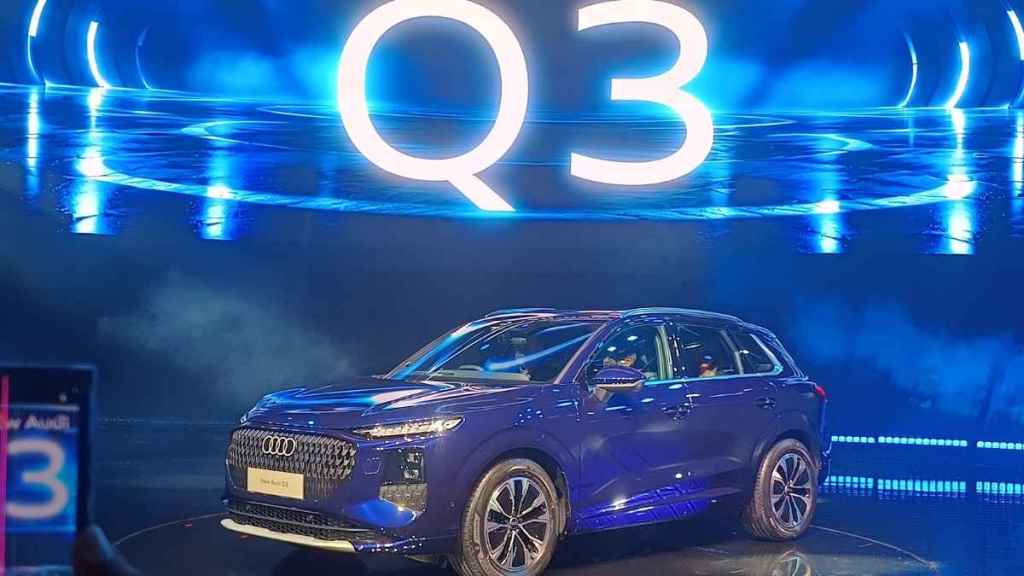
Audi India expects its sales to remain broadly flat in 2026, with growth likely to return from 2027 as currency depreciation and the resulting price increases weigh on luxury car affordability. In an interview with FE at the launch of the Q3 SUV in the country, Balbir Singh Dhillon, head of Audi India, said, “2026 is a transitional year for us. We expect sales for the full year to remain broadly flat, with growth anticipated from 2027.”
Despite the challenging environment, customer interest remains encouraging for Audi. September recorded the company’s second-highest monthly sales figure in the first nine months of 2026, while the launch of the all-new Audi Q3 has strengthened its festive-season outlook, according to Dhillon. The new Q3 SUV was launched with a starting price of `51.99 lakh ex-showroom.
“The broader luxury car market continues to offer significant long-term potential, supported by rising aspirations and replacement demand. However, sharp currency depreciation and the resulting price increases are creating pressure on affordability and customer demand,” he added.
The Q3 has been central to Audi’s near-term strategy with as many as 26,000 units sold in India to date. The latest generation SUV combines updated design, digital technology and quattro all-wheel drive, according to Dhillon. “The response so far has been encouraging and we have a very good order bank ahead of deliveries,” Singh said, adding that the model would help attract fresh customers and encourage existing Audi owners to upgrade.
The Q3 launch is part of a wider portfolio renewal planned over the coming years. Audi has scheduled the A5 sedan for launch in the first half of 2027 and the Q9 flagship SUV for the second half of the year. The Q9 will expand the company’s presence in the D-SUV segment, sitting above the Q7 and targeting customers seeking a larger, more luxurious SUV. SUVs already account for approximately 60% of Audi India’s sales mix, compared with 40% for sedans.
Audi is also evaluating opportunities to locally assemble electric vehicles. “Local manufacturing of electric vehicles is part of Audi India’s long-term road map. We believe localisation will be essential to achieving scale in the Indian market, particularly given the impact of import duties on fully imported electric vehicles,” Singh said. According to Audi, the company’s product strategy will focus primarily on petrol and electric vehicles while addressing gaps in its existing portfolio.