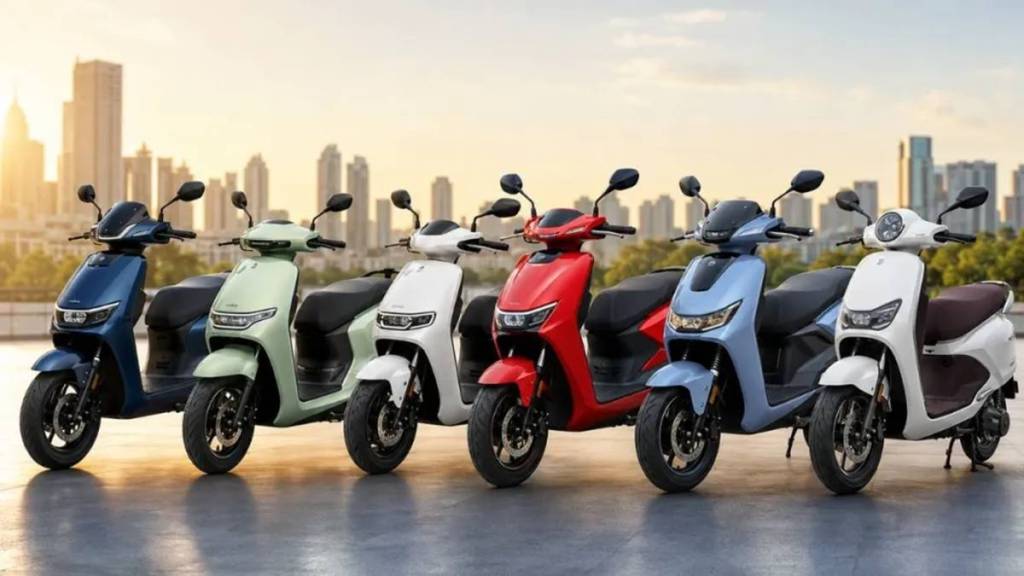
India’s electric two-wheeler (E2W) market continued its consolidation trend, with TVS Motor, Bajaj Auto and Ather Energy retaining their top three positions in the fast-growing vehicle segment while increasing their combined market share to 65% in September. The three companies had a combined market share of 58% in September 2025, which has steadily increased as they roll out a slew of new products targeting the mass-market and family-riding segments, alongside easy financing options.
TVS Motor, the country’s largest E2W maker, more than doubled its monthly sales year-on-year to 49,677 units, inching closer to the 50,000-unit milestone in September, according to the latest Vahan data. The maker of the iQube and Orbiter electric scooters also increased its market share to 26% from 22% in the same month last year. Bajaj Auto also more than doubled its sales to 44,480 units in September, while Ather Energy sold 27,690 units, compared with 19,620 units in September 2025.
To be sure, the current month’s data is available only up to Tuesday. The final sales tally for individual OEMs and the industry will increase further once the full-month data is updated on the Vahan portal.
The narrowing gap in the total cost of ownership between electric two-wheelers and entry-level internal combustion engine (ICE) scooters, along with the expanding charging network and fuel price increases following the West Asia crisis, is driving a shift in consumer behaviour towards electric vehicles.
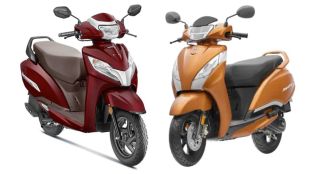
Entry-level variants of popular electric scooters such as the Bajaj Chetak and TVS Orbiter start at around ₹95,000, while Ather Energy has entered the mass market with the Ather Rizta, priced from ₹99,000. In comparison, ICE scooters such as the Honda Activa 125, TVS Jupiter and Suzuki Access 125 are priced in the ₹80,000-1 lakh range, narrowing the price gap between electric and petrol-powered models.
TVS Motor, Ather Energy and Hero MotoCorp are further sweetening the deal for EV buyers by lowering the upfront cost through battery-as-a-service (BaaS) options. For instance, while TVS Motor’s volume growth was earlier driven by its flagship iQube range of scooters, the recently launched Orbiter is now emerging as a key seller on the back of aggressive pricing and easy financing options. The TVS Orbiter V1 is now available for as low as ₹49,999 under the BaaS model, compared with its ex-showroom price of ₹84,500.
Similarly, Ather has lowered the entry price of its scooters to ₹75,999 for the Rizta and ₹84,341 for the 450 range under the BaaS model. Hero MotoCorp, which sells electric scooters under the Vida brand, reported a 66% increase in sales to 22,109 units in September, retaining its 12% market share, similar to the year-ago period. Hero MotoCorp owns a 32.8% stake in Ather Energy. Together, the two companies sold 49,799 units, accounting for a combined market share of 26%, on par with TVS Motor.
Ola Electric continued to retain its fifth position, selling 11,984 units in September, while its market share halved to 6% from a year earlier. Ola Electric commanded nearly 50% of the market at its peak two years ago, before rivals TVS Motor, Bajaj Auto and Ather Energy gained ground.