The premium motorcycle market is showing signs of a shift, with the post-Covid buying boom losing steam, higher taxation and changing consumer preferences weighing on demand for high-capacity bikes. Retail registrations of motorcycles above 500 cc fell 18.2% year-on-year to 24,614 units during April-September, from 30,094 units a year earlier, extending the contraction that began in FY26 after four consecutive years of growth.
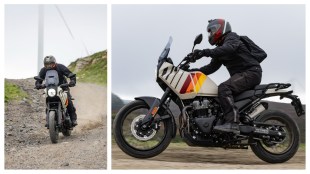
The slowdown has been particularly pronounced at Royal Enfield, which accounts for over 90% of the segment. The company recorded registrations of 22,312 units in the first half of FY27, down 20.1% from 27,930 units a year earlier. Its decline of 5,618 units was actually greater than the overall market contraction of 5,480 units, indicating that other manufacturers collectively gained volumes even as the segment shrank. Triumph Motorcycles India more than doubled registrations to 785 units, while Kawasaki recorded a 36.4% increase to 1,056 units.
The downturn follows a period of rapid expansion, with the market for motorcycles above 500 cc growing from 19,401 units in FY22 to 51,199 units in FY25, before slipping to 50,817 units in FY26. The segment had benefited from rising discretionary spending and aspirational consumption, but analysts said the fading of the post-Covid spending boom, coupled with higher taxation under GST 2.0, has affected demand. GST on motorcycles above 350 cc was raised to 40% from an effective 31% earlier. Economic uncertainty amid the West Asia crisis and layoffs at multinational companies have further made buyers cautious. Purchasers of high-end motorcycles are typically business owners and high-income professionals, whose discretionary spending is sensitive to such uncertainty.
However, the slowdown also points to a broader change in what consumers consider premium. The 500-800 cc category, which accounts for nearly 95% of registrations in the above-500 cc market, saw volumes fall 19.8% to 23,114 units. Royal Enfield’s Interceptor, Continental GT, Super Meteor and Shotgun form a substantial part of this category. Industry executives and analysts said buyers are increasingly evaluating motorcycles on features, technology, styling and performance rather than engine capacity alone. Several models below 500 cc now offer advanced electronics, premium styling and improved performance at relatively accessible prices, reducing the incentive to upgrade to larger-engine motorcycles.
The trend could also create opportunities for international manufacturers to attract aspirational buyers in lower-capacity segments. While the 800-1,000 cc category grew to 916 units from 528 units, registrations in the 1,000-1,600 cc segment fell 34.3% to 419 units. Sales of motorcycles above 1,600 cc rose to 165 units from 105 units, though on a small base. The numbers suggest that premiumisation is not disappearing, but the basis on which consumers define and pay for it is changing.