



“To develop the scientific temper, humanism and the spirit of inquiry and reform”
—List of Fundamental Duties: Article 51A, Part IVA of Indian Constitution
It is not without reason that lawmakers incorporated the above sentence when they were laying down the fundamental duties of every citizen as reflected in the relevant section of the Constitution of India. The critical contribution of science and scientific advancements has been long recognised by those in the know as being the pillar of progress of human civilisations. Imagine if we were still food gatherers instead of agriculturists, discovering the world through travels by foot or on horseback for months and years instead of jet-setting around the globe in hours or even winding up our day-to-day life post-sunset. The fact is such scenarios are today difficult to even imagine.
Therein lies the power of science and scientific progress—the fact that it has the power to imagine the unimaginable. If God has created life on this earth, there is no doubt that science has created quality life.
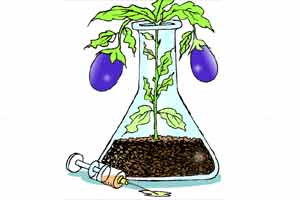
In this context, February 10 has increasingly assumed significance as the anniversary of the absurd in India. It was this very day six years ago, in 2010, when all arguments based on credible scientific research data were summarily dumped by the government of India in favour of ‘popular sentiment’ lacking any scientific basis. Bt brinjal, which was to be India’s first transgenic food crop, duly tested and tried for years and concluded to have passed all biosafety and public health hazard tests by the government itself, was handed out an indefinite moratorium kowtowing to the rabble rousing of a few agenda-driven individuals and organisations. As a result, key benefits of such a crop were denied to Indian farmers already suffering from low yields, health issues and lack of agricultural infrastructure. The moratorium has now entered the seventh year.
What is even more disconcerting is the fact that, six years hence, even with a change of guard at the Centre, more or less the same environment in the country persists with respect to GM technology in general and Bt brinjal in particular, even though the current government claims to be pro-technology and pro-industry.
It is important to note that the apex regulatory body on the subject, the Genetic Engineering Appraisal Committee (GEAC) housed under the ministry of environment, had given the go ahead for commercialisation of Bt brinjal on the basis of its biosafety evaluation. Our neighbour Bangladesh has allowed this crop and is today reaping the benefits of higher yields and improved health of farming communities. So, a technology developed in India and approved by the relevant authorities here is providing benefits to our neighbours, while our farmers are denied the same.
It has been noticed with a sense of alarm that since the imposition of the moratorium on Bt brinjal, the regulatory process has not only further slowed down, but clarity inadequacies on policy have also gained momentum with additional layers of bureaucratic red-tape added to the approval process of transgenic crops. The NOC required from individual state governments post approval received from the GEAC for trials means ease of doing business is certainly a mere slogan when it comes to this key sector of agriculture. Add to this the fact that the GEAC has not even been meeting periodically as it was prior to 2010 to review GM crop applications, and the words “policy paralysis” come to haunt us again.
For those who do not understand the technicalities, the specific objective of Bt brinjal is to help resist attacks from Fruit and Shoot Borer (FSB) pest, which is responsible for destroying up to 50-70% of the marketable brinjal produce. Bt Brinjal not only enhances the crop yield significantly, but also cuts down drastically on pesticide usage.
The farmer, therefore, will not only benefit from increasing and better-quality yields, but also better health, given the reduction in use of pesticides.
Evidence of this has emerged from Bangladesh where, according to preliminary reports from the Bangladesh Agricultural Research Institute (BARI), farmers have reported increased marketable yields of up to 120%, increased income and better standards of living, given their health issues have come down dramatically.
So while we should laud the current government’s achievements and initiatives in many sectors—including those in agriculture where schemes like crop insurance and issuance of soil health cards have shown that the government is indeed thinking about improving the lives of farmers—the ambiguity in the regulatory environment with respect to approval of GM crops is discouraging and defies logic. On one hand, the government speaks about the imperative of an agricultural turnaround in this country to ensure sustainable long-term growth, talks about using more technology in agriculture, and on the other hand it frustrates and restricts research companies and investors in the sector by not bringing in policy clarity on the approval and commercialisation process of the promising GM technology.
As the success of Bt cotton—India has last year become the largest exporter of cotton from being a net importer in the pre-Bt era—indicates, the agri-biotech sector has the potential to positively transform Indian agriculture.
However, decisions such as the Bt brinjal moratorium or even the recent government order on controlling the price of Bt cotton seeds are regressive and will only result in the sector looking for greener pastures overseas after a point.
Indian farmers will be the ones to lose out. We cannot allow our farmers to be deprived of the benefits of innovation and technological advancements in agriculture. We owe them a lot, just as we owe our soldiers who defend the country at the borders. History will not be kind to us if we do not work for the benefits of our food providers.
Such an environment discourages our agricultural scientists, many of whom have spent their entire lives on research, as they will see lack of funds and motivation for their efforts, going forward. The Narendra Modi government started off well with several good initiatives for many industries. Inclusion of biotechnology as one of the key sectors for growth and making it part of the ‘Make in India’ campaign was one such welcome move. Countries and investors were encouraged and invited to invest in the sector. However, if researchers and investors, both at home and globally, do not find a conducive environment to innovate and respect for intellectual property rights, all such initiatives will remain non-starters.
India has so many pressing farm challenges to address, including production of pulses, and the need of the hour is to allow all available and promising technologies to improve our farm productivity, marred by dreaded pest attacks and diseases which are otherwise difficult to control with the conventional methods of cultivation.
We hope that the government will take the right steps and begin with the commercialisation of long-pending Bt brinjal as well as the other promising technology developed indigenously (GM mustard). We also hope it will stand true to its promise of providing a business-friendly environment supportive of innovation.
The author is dean, College of Arts & Sciences, and professor of Crop Genetics & Genomics, Tuskegee University, US